Industrial piping systems rarely operate under perfectly stable conditions. Temperature changes, pressure variations, and constant movement place considerable stress on pipeline components. A well-designed expansion joint helps manage these challenges. But how do you identify a manufacturer that truly understands industrial requirements? The answer lies in engineering expertise, material quality, and dependable manufacturing practices.
Understanding the Role of Axial Expansion Joints
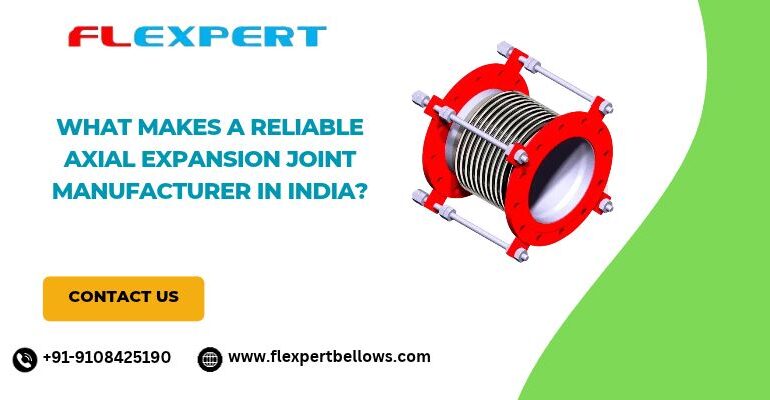
Axial expansion joints are specially engineered components designed to absorb movement along the length of a piping system. When pipelines carry hot fluids or operate in changing environmental conditions, materials naturally expand and contract. Without suitable movement compensation, this thermal stress can affect connected equipment, pipe supports, and joints.
This is why selecting an experienced axial expansion joint manufacturer in India becomes an important decision for industrial projects. The right manufacturer understands how to design metal bellows that accommodate specified axial movement while considering pressure, temperature, and operating conditions.
Industries such as petrochemicals, power generation, oil and gas, and chemical processing regularly depend on these components to support reliable piping operations.
What Makes an Expansion Joint Manufacturer Reliable?
Not every manufacturer approaches expansion joint production with the same level of technical understanding. A dependable manufacturing partner should offer more than a standard product catalogue. Here are the qualities worth examining before making a purchasing decision.
1. Strong Engineering and Design Capabilities
Good engineering is the foundation of a reliable expansion joint. Manufacturers should understand pipeline movement calculations, pressure conditions, operating temperatures, and expected service life before recommending a particular design.
For example, an expansion joint installed in a high-temperature steam pipeline may require different design considerations from one used in a chemical processing system. An experienced engineering team evaluates these differences rather than offering a one-size-fits-all solution.
Look for manufacturers familiar with the Expansion Joint Manufacturers Association (EJMA) standards. These internationally recognised guidelines support the selection, design, and application of metallic bellows expansion joints.
2. Quality Materials and Accurate Fabrication
Material selection has a direct influence on durability and performance. Stainless steel is commonly used in metal bellows because of its useful mechanical properties and corrosion resistance. However, the appropriate grade depends on the actual operating environment.
A reliable manufacturer carefully considers:
- Material compatibility: The selected metal should suit the conveyed medium and operating temperature.
- Bellows thickness: Thickness influences flexibility, pressure resistance, and fatigue performance.
- Welding quality: Consistent fabrication helps maintain structural integrity and leak resistance.
- Dimensional accuracy: Proper measurements support correct installation and alignment.
These details may seem technical, but they can make a considerable difference once equipment enters regular operation.
3. Thorough Testing and Quality Control
Manufacturing quality should never depend on appearance alone. Every expansion joint needs appropriate inspection and testing according to its design specifications and project requirements.
Depending on the application, quality procedures may include material verification, dimensional inspection, weld examination, and pressure or leak testing. Manufacturers should also maintain suitable documentation to demonstrate that products meet agreed specifications.
Ask whether the company can provide inspection reports, material test certificates, and relevant quality records. Transparent documentation makes supplier evaluation much easier.
Why Customisation Matters in Industrial Applications?
Industrial piping layouts are rarely identical. Some systems experience significant thermal movement, while others face vibration, restricted installation space, or demanding pressure conditions. This is where customised engineering becomes valuable.
A capable bellows expansion joints manufacturer should be able to assess project requirements and recommend suitable configurations rather than relying entirely on standard dimensions.
Before requesting a quotation, prepare the following technical information:
- Operating and design pressure of the pipeline.
- Minimum and maximum operating temperatures.
- Required axial movement and expected movement cycles.
- Pipe diameter, connection type, and available installation space.
- Nature of the fluid or gas passing through the system.
Sharing these details early helps the manufacturer understand the application and develop a more appropriate technical proposal.
Bellows Thickness: A Detail That Deserves Attention
Bellows thickness is one of those engineering details that deserves more attention than it often receives. A bellows must remain flexible enough to accommodate movement while also meeting the pressure and durability requirements of the application.
Thickness cannot be selected independently of other design factors. Material properties, convolution geometry, operating pressure, temperature, and fatigue requirements all influence the final specification.
For a deeper understanding, explore The Role of Bellows Thickness in Industrial Equipment Performance. Understanding these engineering considerations can help procurement teams ask more informed questions when evaluating suppliers.
How to Evaluate a Manufacturer Before Ordering?
Choosing an industrial supplier is a long-term business decision. A competitive quotation may look attractive, but technical support and manufacturing consistency matter just as much.
Consider these practical evaluation points:
- Review the manufacturer’s experience with similar industrial applications.
- Check its production facilities, inspection procedures, and quality documentation.
- Ask about customised designs and engineering consultation.
- Evaluate delivery commitments, communication, and after-sales assistance.
It is also worth discussing installation guidance and maintenance recommendations. Even a well-manufactured expansion joint needs correct installation and appropriate pipeline supports to perform as intended.
Frequently Asked Questions
1. What does an axial expansion joint manufacturer do?
An axial expansion joint manufacturer designs and produces components that accommodate longitudinal movement in piping systems. These products help manage thermal expansion and contraction under specified operating conditions.
2. Which materials are commonly used for axial expansion joints?
Stainless steel grades are widely used for metallic bellows. The appropriate material depends on temperature, pressure, corrosion exposure, and the nature of the process fluid.
3. Why are EJMA standards important?
EJMA standards provide recognised engineering guidance for the selection, design, and application of metallic bellows expansion joints. They help manufacturers and engineers follow established technical practices.
4. How can I choose the right manufacturer in India?
Evaluate engineering capabilities, material quality, fabrication expertise, inspection procedures, customisation options, and technical support. Request relevant documentation before finalising your supplier.
Final Thoughts
A reliable axial expansion joint manufacturer brings together engineering knowledge, careful material selection, accurate fabrication, and consistent quality control. For industrial buyers, looking beyond price can lead to better product selection and more dependable piping performance. Take time to compare technical capabilities, discuss project requirements, and choose a manufacturing partner that understands the demands of your application.
Listen Here: Click Now