Industrial pipelines are built to carry demanding loads, but they are not designed to remain motionless. Heat, pressure changes, equipment vibration, and structural shifts can gradually create unwanted stress. Without proper movement management, even a well-installed pipeline may develop operational problems. This is where advanced gimbal joint technology offers a smarter approach to maintaining system stability and reliability.
Modern industries need expansion solutions that accommodate movement without placing unnecessary loads on connected equipment. A properly engineered gimbal joint helps achieve this balance. Working with a reliable gimbal expansion joints manufacturer india can help businesses identify suitable designs for their specific pipeline requirements.
Why Do Industrial Pipelines Experience Excessive Stress?
Imagine a long metal pipeline carrying hot steam throughout a manufacturing facility. As the temperature rises, the metal expands. When the system cools, it contracts again. Although this movement may appear small, it can create considerable forces across long piping networks.
Other factors contribute to the problem. Rotating machinery creates vibration, pressure fluctuations influence mechanical loads, and changes in structural alignment introduce additional movement. When these forces are not properly accommodated, they may affect pipe supports, equipment connections, and welded sections.
Common consequences of poorly managed pipeline movement include:
- Increased mechanical loading on connected equipment and pipeline supports.
- Premature wear or fatigue in flexible components and connections.
- Alignment difficulties around pumps, compressors, and turbines.
- Unexpected maintenance requirements and production interruptions.
Rather than simply strengthening every pipeline section, engineers need to consider how movement can be controlled. That is where expansion joint technology becomes important.
How Advanced Gimbal Joint Technology Works?
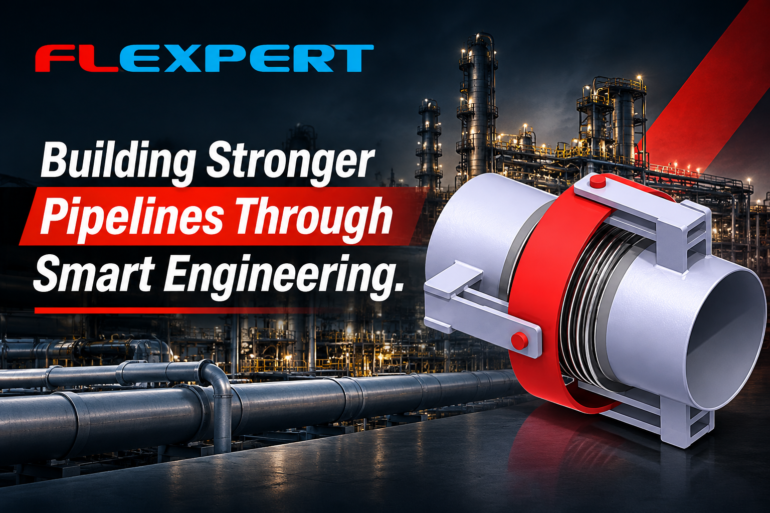
A gimbal expansion joint combines a flexible metal bellows with a supporting arrangement consisting of two pairs of hinges connected through a common floating gimbal ring. This mechanical configuration permits angular rotation in different planes while the supporting hardware is designed to restrain pressure thrust.
In simple terms, the system allows controlled flexibility without giving the pipeline unrestricted movement. Think of a carefully designed mechanical pivot: it allows movement in the intended direction while maintaining structural control.
Managing Angular Rotation More Effectively
One major advantage of gimbal joints is their ability to accommodate angular movement in any plane. This is especially useful in complicated piping arrangements where thermal expansion does not occur along a single straight line.
Gimbal joints are also frequently used in pairs or coordinated arrangements. When correctly positioned and engineered, these assemblies can accommodate lateral deflection in complex pipeline configurations.
Controlling Pressure-Related Forces
Internal pressure can generate substantial thrust within an expansion joint. The gimbal ring, hinge plates, and pins are designed to restrain this thrust, reducing the need to transfer it to external equipment or other pipeline components. Their capacity must, however, be verified against the actual operating loads.
For a technical description of this configuration, refer to ASTM F2934 metallic bellows expansion joint specifications.
Industrial Applications That Benefit from Gimbal Joints
Different industries operate under different pressure and temperature conditions. Nevertheless, many facilities share one challenge: their piping systems must accommodate movement without compromising equipment performance.
- Power plants: Steam distribution lines experience repeated thermal expansion and contraction during operating cycles.
- Oil and gas facilities: Complex piping networks require carefully controlled movement accommodation.
- Petrochemical industries: Process pipelines benefit from engineered solutions that address angular movement and pressure thrust.
- Steel manufacturing: High-temperature processes create demanding conditions for metallic expansion joints.
For these applications, selecting a suitable joint requires more than checking its nominal size. Operating conditions and the actual piping arrangement must guide the engineering decision.
Choosing the Right Expansion Joint Manufacturing Partner
Even an advanced design cannot deliver dependable performance without proper manufacturing and engineering. Material selection, bellows thickness, hinge strength, fabrication quality, and dimensional accuracy all influence the finished product.
When evaluating a bellows expansion joints manufacturer, industrial buyers should look beyond product availability and consider the manufacturer’s technical capabilities.
Here are several important points worth discussing before placing an order:
- Operating parameters: Share the design pressure, temperature, and process medium.
- Movement calculations: Clearly identify the expected angular rotation and lateral displacement.
- Material compatibility: Select suitable alloys based on corrosion resistance and operating conditions.
- Structural strength: Evaluate the hinges, pins, gimbal ring, and their connections for anticipated loads.
- Inspection procedures: Review fabrication checks, dimensional inspections, and applicable testing requirements.
It is equally important to coordinate the joint design with anchors, guides, and pipe supports. A technically correct component can still encounter problems if the surrounding piping arrangement is unsuitable.
Gimbal Joints and Other Expansion Solutions
Not every pipeline requires the same type of expansion joint. Axial expansion joints accommodate movement along the pipe axis, while universal expansion joints commonly use two bellows connected by an intermediate spool to accommodate lateral movement.
Gimbal joints are particularly useful when angular rotation in multiple planes needs to be accommodated while restraining pressure thrust. Hinged expansion joints, by comparison, generally allow angular movement in one plane.
Engineers considering different configurations may also find it useful to explore How Tied Universal Joints Absorb Angular Rotation? to understand how alternative restraint arrangements manage pipeline movement.
The right choice ultimately depends on movement calculations, operating conditions, available installation space, and the overall piping design.
Frequently Asked Questions
1. What is the main purpose of a gimbal expansion joint?
Its primary purpose is to accommodate angular rotation in multiple planes while restraining pressure thrust through its supporting hinge and gimbal arrangement.
2. Can gimbal expansion joints reduce pipeline maintenance?
Properly designed and installed gimbal joints can help manage movement-related loads, potentially reducing premature wear and maintenance associated with excessive pipeline stress.
3. Are gimbal expansion joints suitable for high-temperature applications?
Yes. They can be engineered for high-temperature services, provided the bellows material, structural components, and design parameters are suitable for the application.
4. How should engineers select a gimbal expansion joint?
Engineers should consider operating pressure, temperature, angular rotation, material compatibility, pressure thrust, piping layout, and installation requirements before finalizing a design.
Final Thoughts
Reliable pipeline performance is not simply about using stronger materials or adding more supports. It is about understanding movement and managing it intelligently. Advanced gimbal joint technology gives industrial systems a controlled way to accommodate angular rotation and pressure-related forces. With thoughtful engineering, quality manufacturing, and proper installation, businesses can build more dependable piping networks and keep essential operations running smoothly.
Listen Here: Click Now