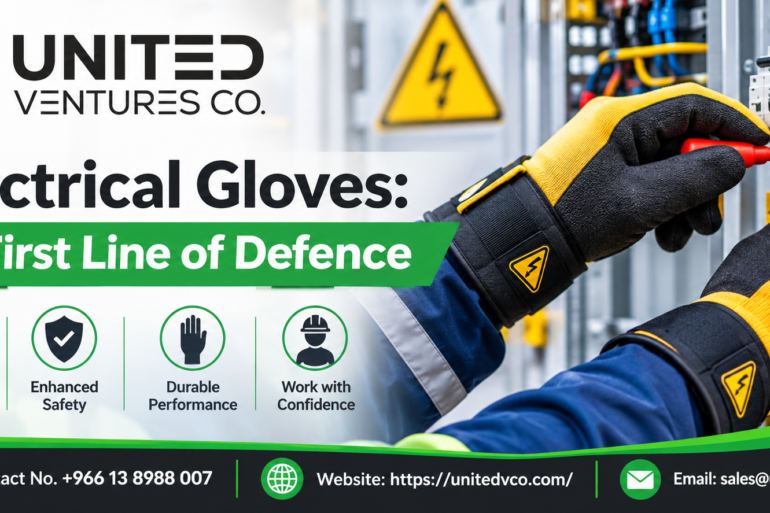
Industrial maintenance work rarely follows a predictable schedule. One day, technicians may be inspecting control panels; the next, they could be troubleshooting motors, switchgear or electrical distribution systems. Even a routine task can expose workers to dangerous electrical energy. This is where electrical gloves become an essential part of workplace protection.
Across Saudi Arabia, industrial facilities, oil and gas operations, manufacturing plants and infrastructure projects depend on maintenance teams to keep equipment running. Proper electrical hand protection helps reduce the risk of serious injuries while allowing trained technicians to perform their responsibilities with greater confidence.
1. Creating a Protective Barrier Against Electrical Hazards
The most important function of electrical safety gloves is to provide insulation between a worker’s hands and potentially energised electrical components. Specially manufactured rubber insulating gloves are designed to resist the flow of electrical current when selected according to the voltage exposure and used correctly.
Consider a maintenance technician inspecting an electrical distribution panel in an industrial facility in Dammam. An unexpected contact with an energised component could result in a severe electric shock. Properly rated insulating gloves create an additional protective barrier, helping reduce the possibility of current passing through the worker’s body.
However, not every pair of rubber gloves offers electrical protection. Ordinary industrial gloves, cleaning gloves and general-purpose hand protection cannot replace certified insulating equipment. The glove’s voltage rating, condition and suitability for the particular task all matter.
2. Reducing the Risk of Electrical Burns and Serious Injuries
Electrical accidents can cause more than a momentary shock. Contact with energised equipment may lead to deep burns, tissue damage, involuntary muscle contractions and potentially life-threatening injuries. Electrical arc flash incidents can also expose workers to intense heat and flying debris.
Insulating gloves help protect workers against electrical contact hazards when used within their approved voltage limits. They form one layer of a broader electrical safety programme, rather than offering complete protection against every electrical incident.
For maintenance teams working around transformers, industrial motors and switchgear, this distinction is important. Employers must assess the potential hazards and select suitable personal protective equipment (PPE), including arc-rated clothing and other protective equipment where the risk assessment requires it.
3. Understanding Electrical Glove Classes
Choosing gloves based on appearance or thickness is a mistake. Electrical insulating gloves are classified according to their electrical performance and maximum use voltage. Under the OSHA electrical protective equipment classification system, the main classes include:
- Class 00: Maximum use voltage of 500V AC.
- Class 0: Maximum use voltage of 1,000V AC.
- Class 1: Maximum use voltage of 7,500V AC.
- Class 2: Maximum use voltage of 17,000V AC.
- Class 3: Maximum use voltage of 26,500V AC.
- Class 4: Maximum use voltage of 36,000V AC.
These are maximum use voltage ratings, not the electrical proof-test voltages. The correct selection depends on the actual electrical exposure, system configuration and applicable safety requirements. A qualified electrical safety professional should determine the appropriate glove class before work begins.
For a more detailed look at product selection, maintenance requirements and purchasing considerations, businesses can refer to the Safety Gloves Buying Guide for Manufacturing and Engineering Industries.
4. Protecting Hands During Everyday Maintenance Activities
Industrial maintenance involves numerous tasks where workers operate close to electrical equipment. Even when a job appears straightforward, unexpected conditions can introduce additional risks.
Electrical insulating gloves are particularly important when qualified personnel perform authorised tasks involving exposed energised electrical parts. Depending on the risk assessment, they may be required for activities such as:
- Inspecting and maintaining electrical distribution panels.
- Working on authorised electrical control and switching systems.
- Carrying out maintenance around motors and electrical connections.
- Performing approved testing and troubleshooting procedures.
- Working on electrical installations where exposure to energised components cannot be eliminated.
In Saudi industrial environments, where maintenance operations may take place in demanding outdoor and indoor conditions, choosing suitable equipment is especially important. A safety helmet can provide additional head protection, while eye protection, appropriate footwear and protective clothing complete the wider PPE arrangement.
5. Why Inspection and Proper Maintenance Matter
Here is something maintenance supervisors should never overlook: even high-quality insulating gloves can become unsafe when damaged, contaminated or stored incorrectly.
A tiny puncture may not look particularly concerning, but it can compromise the glove’s insulating performance. Regular inspection should therefore be part of the team’s daily preparation routine.
Before use, workers should:
- Inspect the surface: Look for cuts, holes, cracks, punctures, embedded objects and unusual changes in texture.
- Perform an air test: Inflate the glove according to the approved inspection procedure and check for escaping air.
- Check the markings: Confirm the glove class, manufacturer information and relevant test details.
- Use leather protector gloves: Wear suitable outer protectors over insulating gloves to reduce mechanical damage, as required by the applicable safety procedure.
- Store them correctly: Keep gloves clean and dry, away from direct sunlight, excessive heat, sharp objects, chemicals and other damaging conditions.
Inspection alone is not enough. Electrical insulating gloves also require periodic electrical testing by a competent testing facility. For example, OSHA’s 29 CFR 1910.137 specifies testing before first issue and every six months thereafter for rubber insulating gloves, along with additional testing in certain circumstances. These intervals provide a useful technical reference, although Saudi employers must follow the applicable local requirements and their approved safety procedures.
Read the official OSHA electrical protective equipment requirements for further information.
6. Supporting a Stronger Electrical Safety Culture in Saudi Arabia
Electrical protection should never depend on individual workers making last-minute decisions. Industrial organisations need clear procedures covering hazard identification, equipment selection, worker training and routine inspections.
Saudi Arabia’s industrial growth makes consistent workplace safety practices particularly important across manufacturing, energy, construction and infrastructure operations. Employers should ensure that maintenance personnel understand when insulating gloves are necessary, how to inspect them and when damaged equipment must be removed from service.
Just as importantly, gloves should never encourage workers to take unnecessary risks. De-energising equipment, applying lockout/tagout procedures, verifying the absence of voltage and following authorised work practices remain fundamental precautions. Insulating gloves are an additional protective measure, not permission to work carelessly around live electrical systems.
Frequently Asked Questions
1. Why are electrical safety gloves important for industrial maintenance workers?
They provide an insulating barrier against electrical contact hazards when correctly selected and used. This helps reduce the risk of electric shock and associated injuries during authorised electrical maintenance activities.
2. Can ordinary rubber gloves protect workers from electric shock?
No. Ordinary rubber gloves are not designed or tested to provide electrical insulation. Workers need purpose-made, appropriately rated electrical insulating gloves that meet the relevant safety standards.
3. How often should electrical insulating gloves be inspected?
Gloves should be visually inspected and air-tested before each day’s use and after any incident that may have damaged them. Periodic electrical testing is also necessary according to the applicable standards and testing schedule.
4. Should leather gloves be worn over electrical insulating gloves?
Yes, suitable leather protector gloves should generally be worn over rubber insulating gloves. They help prevent cuts, punctures and abrasion that could compromise the insulating layer. Any permitted exceptions must follow the applicable safety requirements.
Final Thoughts
Electrical safety gloves may seem like a small part of an industrial maintenance team’s equipment, but their role is anything but minor. They help protect workers against electrical contact hazards, support safer maintenance practices and contribute to a more responsible workplace culture. For Saudi businesses, investing in correctly rated insulating gloves, regular testing and proper worker training is a practical step towards safer industrial operations.