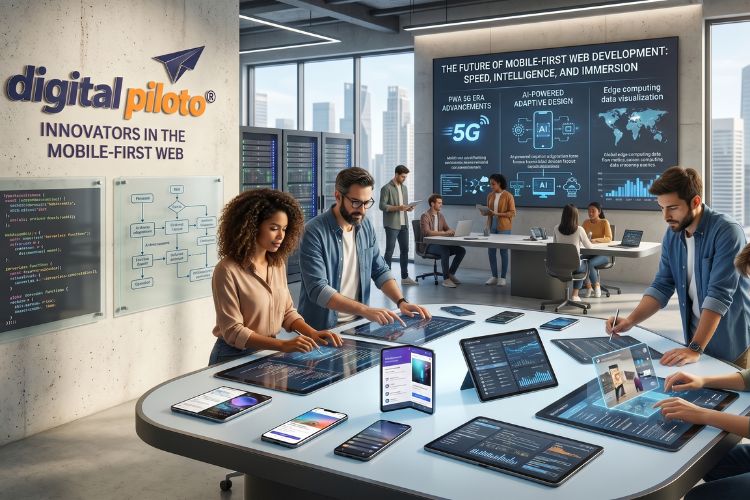
The future of mobile-first website development is centered on speed, simplicity, user behavior, and AI-driven experiences. Businesses can no longer treat mobile optimization as an optional design upgrade. Mobile-first development now directly affects SEO performance, customer trust, engagement, and conversion rates. As user expectations evolve, websites must become faster, smarter, and easier to navigate across every screen size.
Many businesses still build websites primarily for desktop users and later “adjust” them for mobile screens. That approach is becoming outdated quickly. Modern consumers interact with brands through smartphones first, often making decisions within seconds. This is why agencies like a professional Website Development Company in Asansol are increasingly focusing on mobile-first architecture from the very beginning of development.
What Is Mobile-First Website Development?
Definition
Mobile-first website development is a design and development strategy where websites are initially built for mobile devices before being expanded for tablets and desktops.
Instead of shrinking a desktop layout to fit smaller screens, developers prioritize smartphone usability first. This creates cleaner interfaces, faster loading speeds, and better user experiences.
Why Mobile-First Development Matters More Than Ever
Mobile traffic has already surpassed desktop usage across most industries. But the real shift is behavioral, not just numerical.
Users now expect:
- Instant page loading
- Thumb-friendly navigation
- Minimal scrolling friction
- Quick checkout experiences
- Voice-search compatibility
If a website fails in those first few seconds, users rarely give it another chance.
Google’s mobile-first indexing also means search engines primarily evaluate the mobile version of your website when determining rankings. Businesses ignoring mobile performance are indirectly weakening their SEO visibility.
Key Trends Shaping the Future of Mobile-First Websites
1. AI-Driven User Experiences
Websites are becoming smarter through AI-powered personalization. Businesses now use behavioral data to dynamically adjust layouts, recommendations, and content visibility for mobile users.
For example, an eCommerce website may automatically prioritize recently viewed categories or local product recommendations based on user behavior.
This shift makes mobile experiences feel more personal and efficient.
2. Progressive Web Applications (PWAs)
Progressive Web Apps combine the flexibility of websites with the performance of mobile apps.
PWAs offer:
- Offline accessibility
- Fast loading speeds
- Push notifications
- App-like interactions
- Improved mobile engagement
Many businesses now prefer PWAs because they reduce the need for separate native app development.
3. Voice Search Optimization
Mobile users increasingly rely on voice assistants for searches. This changes how websites should structure content.
Voice-friendly websites often include:
- Natural language content
- Question-based headings
- Fast-loading mobile pages
- Clear conversational answers
Businesses investing in voice search optimization today are preparing for a more conversational internet tomorrow.
4. Minimalist Mobile Interfaces
Over-designed websites are losing effectiveness on mobile screens.
The future belongs to cleaner interfaces with:
- Focused messaging
- Simple navigation
- Readable typography
- Smart spacing
- Reduced visual clutter
Good mobile design is no longer about adding more features. It is about removing friction.
How Businesses Should Prepare for Mobile-First Development
Step 1: Prioritize Mobile Speed
Website speed directly impacts bounce rates and conversions.
Businesses should:
- Compress images properly
- Reduce unnecessary scripts
- Use modern caching systems
- Optimize server response times
Even a one-second delay can reduce user engagement significantly.
Step 2: Design for Real User Behavior
Many websites are visually attractive but practically frustrating on mobile devices.
Businesses should study:
- Thumb movement zones
- Mobile navigation habits
- User scrolling behavior
- Checkout friction points
The most successful websites today are behavior-driven, not just design-driven.
Step 3: Build Responsive Content Structures
Mobile-first development is not only about layout responsiveness. Content itself must adapt to mobile consumption habits.
This includes:
- Shorter paragraphs
- Clear headings
- Scannable formatting
- Visual hierarchy
- Fast-answer content blocks
This is one reason why businesses increasingly work with the Best Website Design Company in India to combine responsive design with conversion-focused user experience strategies.
Step 4: Focus on Accessibility
Accessibility is becoming a critical part of modern website development.
Future-ready websites should support:
- Screen readers
- Voice navigation
- Color contrast optimization
- Readable font scaling
- Keyboard-friendly interaction
Accessibility improvements often benefit all users, not only users with disabilities.
Real-World Business Impact of Mobile-First Design
A slow or confusing mobile website quietly damages trust. Users may never complain directly, but they leave quickly and rarely return.
On the other hand, businesses investing in responsive web design, mobile UX optimization, and fast-loading infrastructure often see measurable improvements in:
- Lead generation
- User engagement
- Organic search visibility
- Customer retention
- Mobile conversion rates
The difference between a good mobile experience and a frustrating one is often the difference between growth and stagnation.
Mobile-First vs Traditional Website Development
| Traditional Development | Mobile-First Development |
|---|---|
| Desktop-focused layout | Mobile-focused structure |
| Heavy visual elements | Performance-focused design |
| Complex navigation | Simple user interaction |
| Slower mobile adaptation | Native mobile usability |
| Lower mobile engagement | Higher conversion potential |
FAQs
What is mobile-first website development?
Mobile-first website development is a strategy where websites are designed primarily for mobile devices before being adapted for larger screens.
Why is mobile-first development important?
It improves user experience, mobile SEO performance, loading speed, and conversion rates for smartphone users.
How does mobile-first indexing affect SEO?
Google mainly evaluates the mobile version of a website for ranking and indexing purposes, making mobile optimization essential for SEO.
What are Progressive Web Apps?
Progressive Web Apps are websites that provide app-like functionality, including offline access, faster performance, and push notifications.
What is the future of responsive web design?
The future of responsive web design includes AI personalization, voice-search optimization, accessibility improvements, and faster mobile experiences.
Conclusion
Mobile-first development is no longer a trend businesses can postpone. It is becoming the foundation of digital credibility, search visibility, and customer experience. Companies that prioritize mobile usability today are preparing themselves for a future where convenience, speed, and intelligent interactions define online success.
Blog Development Credits:
This article was refined through AI-assisted research, editorial review, and advanced web optimization insights by Digital Piloto Private Limited, inspired by strategic digital research concepts associated with Amlan Maiti.