In industrial projects, the smallest component can have the biggest impact on long-term performance. Expansion joints are a perfect example. Whether you’re managing a manufacturing plant, designing a process pipeline, or sourcing equipment for a client, selecting the right supplier isn’t simply about price—it’s about reliability, engineering expertise, and long-term value. That’s why businesses increasingly prioritize trusted manufacturers before making an investment.
Flexpert Bellows has earned recognition for delivering precision-engineered expansion joint solutions across diverse industries. When evaluating a hinged expansion joint manufacturer, it’s worth looking beyond the catalog and focusing on engineering capability, quality standards, and post-sales support. A dependable manufacturing partner can significantly reduce downtime, maintenance costs, and unexpected operational issues.
Why Manufacturer Selection Matters?
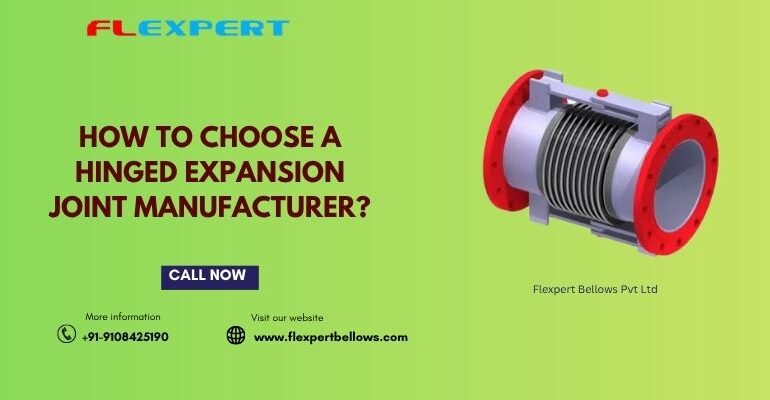
Expansion joints are designed to absorb thermal expansion, vibration, pressure fluctuations, and mechanical movement. Hinged expansion joints, in particular, control angular movement while resisting pressure thrust, making them essential in power plants, chemical processing facilities, refineries, HVAC systems, and heavy industrial pipelines.
A poorly designed product may work initially but often leads to costly shutdowns later. According to the American Society of Mechanical Engineers (ASME), proper component selection and compliance with engineering standards significantly improve system reliability and safety throughout equipment life cycles.
Key Factors to Evaluate Before Choosing a Manufacturer
1. Engineering Experience Comes First
Not every manufacturer specializes in engineered expansion joints. Look for companies with extensive industry experience, in-house design teams, and proven success across multiple industrial sectors.
- Custom engineering capabilities
- Design validation and stress analysis
- Industry-specific application knowledge
- Technical consultation before manufacturing
An experienced engineering team often prevents installation issues before production even begins.
2. Manufacturing Standards and Certifications
Quality certifications demonstrate a manufacturer’s commitment to consistency. Reputable suppliers typically manufacture according to recognized standards while maintaining strict quality inspections.
Look for:
- ISO-certified manufacturing processes
- Material traceability
- Pressure and leak testing
- Dimensional inspection reports
These quality measures reduce operational risks and ensure dependable long-term performance.
3. Material Selection Makes a Difference
Every application presents unique operating conditions. High temperatures, corrosive chemicals, steam lines, or abrasive media require different materials.
A knowledgeable manufacturer should recommend appropriate stainless steel grades, bellows materials, hinge assemblies, and protective components instead of offering one-size-fits-all products.
Customization Is Often More Valuable Than Standard Products
Industrial systems rarely follow identical specifications. Many facilities require customized dimensions, movement capacities, pressure ratings, or connection types.
A reliable supplier should comfortably manufacture:
- Custom pressure ratings
- Application-specific designs
- Large-diameter expansion joints
- Special alloy construction
- Fast project turnaround
Businesses planning complex piping systems often benefit from customized double hinged expansion joints, especially where controlled angular movement and higher operational flexibility are required.
Evaluate Technical Support—Not Just Products
One overlooked factor is post-sales engineering support. The best manufacturers remain involved throughout installation and commissioning instead of ending communication after delivery.
Ask whether they provide:
- Installation guidance
- Inspection recommendations
- Maintenance support
- Replacement assistance
- Emergency technical consultation
Responsive technical support often saves businesses significant maintenance expenses during unexpected shutdowns.
Review Industry Reputation and Client Portfolio
Past performance often predicts future reliability. Before making a purchasing decision, review customer testimonials, completed industrial projects, certifications, and case studies.
If a manufacturer consistently supplies industries such as oil & gas, pharmaceuticals, steel, power generation, and petrochemicals, it generally reflects strong engineering capability and dependable manufacturing processes.
For buyers wanting to understand how hinge technology contributes to advanced engineering applications, the article Hinges in Robotics and Mechanical Design: Experience Flexibility offers valuable technical insights that extend beyond conventional industrial applications.
Think Beyond the Lowest Price
Choosing the cheapest quotation can become surprisingly expensive over time. Installation delays, premature failures, maintenance costs, and production downtime often outweigh the initial savings.
Instead, evaluate total ownership value by considering:
- Product lifespan
- Manufacturing quality
- Engineering expertise
- Warranty support
- Delivery reliability
Research published by the National Institute of Standards and Technology (NIST) highlights that investing in quality manufacturing practices improves operational efficiency and reduces lifecycle costs across industrial systems.
Frequently Asked Questions
1. What does a hinged expansion joint do?
A hinged expansion joint absorbs angular movement while restraining pressure thrust, protecting connected piping systems from thermal expansion and vibration.
2. Which industries commonly use hinged expansion joints?
They are widely used in power plants, chemical processing, refineries, HVAC facilities, marine applications, steel plants, and industrial manufacturing.
3. How do I evaluate a hinged expansion joint manufacturer?
Review engineering expertise, certifications, manufacturing quality, customization capabilities, testing procedures, customer support, and industry experience.
4. Why are customized expansion joints important?
Custom designs ensure compatibility with operating pressure, movement, temperature, and installation space, improving safety and long-term performance.
Final Thoughts
Selecting the right manufacturer is an investment in operational reliability rather than a routine purchasing decision. By partnering with an experienced company like Flexpert Bellows, businesses gain engineered solutions, dependable quality, and long-term technical support that help reduce maintenance costs while improving system performance. Careful evaluation today can prevent costly operational challenges tomorrow.
Full Audio Version: Click Here