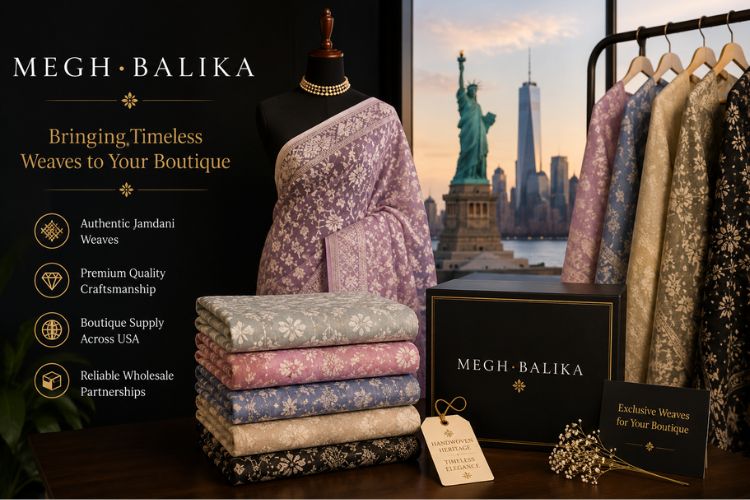
Jamdani has a way of making a boutique collection feel instantly more personal. Its delicate motifs, airy texture, and hand-crafted character are difficult to reproduce convincingly at scale. For USA boutiques, though, finding the right supplier means balancing authentic craftsmanship with dependable quality, pricing, communication, and delivery.
A dependable Jamdani Boutique Supplier USA can help retailers bring this distinctive South Asian textile tradition to American customers without losing the details that make each saree special. The key is knowing what to look for before placing a wholesale order.
Also Read: The Best Fabrics for Traditional Women’s Wear: A Comprehensive Guide
Why Jamdani Works So Well for Boutique Collections
Unlike mass-produced fashion fabrics that can look almost identical from one piece to another, Jamdani carries a sense of individuality. Traditional motifs are woven into the fabric rather than simply printed on top, giving the saree a subtle depth that customers can appreciate up close.
For a boutique owner, that difference matters. A carefully selected Jamdani collection can become a signature category rather than just another rack of ethnic clothing. It can also appeal to customers looking for occasion wear, heritage-inspired fashion, or distinctive gifts.
What Makes a Good Jamdani Saree Supplier?
Choosing a wholesale supplier should involve more than comparing the lowest price. A beautiful sample means little if the next shipment varies significantly in quality or arrives after your seasonal buying window has passed.
- Authentic craftsmanship: Look for suppliers who understand traditional Jamdani weaving and can explain the construction of their sarees.
- Consistent quality: Check fabric feel, motif clarity, finishing, borders, and overall weaving quality across multiple samples.
- Wholesale flexibility: Smaller boutiques may need manageable quantities rather than enormous minimum orders.
- Reliable communication: Clear responses about colours, dimensions, availability, pricing, and dispatch can prevent costly misunderstandings.
- Export readiness: Suppliers should understand packaging, documentation, and international shipping requirements.
Craftsmanship Should Come Before Catalog Size
It is tempting to choose the supplier with hundreds of designs. In practice, a smaller but thoughtfully curated catalogue can be much more valuable. A boutique needs pieces that complement its customer base, not simply more product pages.
Ask for close-up photographs and, where possible, physical samples. Pay attention to the weave, motif placement, fabric drape, finishing around the edges, and whether the colours appear consistent with the product description.
How US Boutiques Can Build a Strong Jamdani Collection
A successful collection usually has a little rhythm to it. Instead of ordering twenty sarees that compete for attention, consider mixing understated designs with a few statement pieces. This gives customers different entry points and makes the collection feel curated.
- Start with versatile colours that can appeal to both traditional and contemporary shoppers.
- Add distinctive motifs that give the collection a recognisable handcrafted identity.
- Mix price points so customers with different budgets can explore Jamdani.
- Include seasonal selections for weddings, festivals, celebrations, and gifting.
There is also a useful business lesson here: boutique buyers should think beyond the saree itself. Product photography, storytelling, styling suggestions, and information about the textile’s craftsmanship can make a meaningful difference when selling heritage products to customers who may be discovering Jamdani for the first time.
Beyond Jamdani: Add Complementary Indian Textiles
Once a boutique has established a Jamdani category, complementary textiles can broaden the collection without making it feel disconnected. Kantha, for example, brings a very different visual language through its layered fabric and decorative stitching.
Working with a kantha embroidery supplier USA can help boutiques introduce handcrafted Indian textiles alongside their saree range. The combination can work particularly well for retailers building a wider South Asian or artisan-fashion collection.
Questions to Ask Before Ordering
- What fabric and weaving technique are used?
- Are the motifs woven or printed?
- What are the available wholesale quantities?
- How long does production or replenishment usually take?
- Can the supplier provide detailed product measurements and images?
- How are international orders packaged for transit?
These questions may sound basic, but they can reveal a great deal about how professionally a supplier operates.
Frequently Asked Questions
What should USA boutiques look for in a Jamdani wholesaler?
Look for authentic craftsmanship, consistent fabric quality, clear product information, reasonable wholesale terms, responsive communication, and experience handling international orders.
Is Jamdani suitable for contemporary US fashion boutiques?
Absolutely. While Jamdani has deep cultural roots, its lightweight feel, intricate motifs, and elegant appearance can work beautifully with contemporary styling and modern boutique collections.
How should boutiques check Jamdani quality before buying in bulk?
Request samples and inspect the fabric, weave, motif definition, borders, finishing, measurements, and colour consistency. A sample order is usually safer than committing immediately to a large quantity.
Can boutiques sell Jamdani alongside other Indian textiles?
Yes. Jamdani can be paired with complementary handcrafted categories such as Kantha, giving customers a broader selection while maintaining an artisan-focused product identity.
Final Thoughts
The best Jamdani supplier is not necessarily the one with the biggest catalogue or the lowest quotation. For a USA boutique, the real value lies in authentic workmanship, dependable quality, thoughtful designs, and a supplier relationship that can grow with the business. Choose carefully, start with samples, and let the craftsmanship speak for itself.
Blog Development Credits:
This article was developed by Megh Balika, supported by AI-assisted research and drafting, then refined through human review, SEO enhancement, and final content optimization.