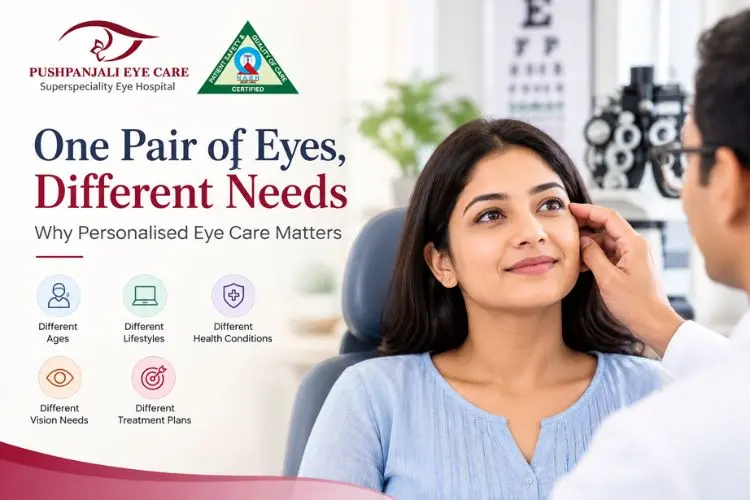
Personalised eye care matters because no two people have exactly the same vision needs, medical history, lifestyle, or treatment priorities. The right approach depends on factors such as age, existing eye conditions, daily activities, and individual risk. At Pushpanjali Eye Care, understanding these differences is central to helping patients make informed decisions about their eye health and treatment options.
When choosing an eye hospital Kolkata, patients should look beyond a basic vision test. A thorough evaluation helps an eye specialist understand not only how clearly someone sees, but also what may be affecting their long-term eye health.
What Is Personalised Eye Care?
Personalised eye care is an approach to eye health in which examination, diagnosis, treatment recommendations, and follow-up are tailored to the individual patient rather than following the same plan for everyone.
For example, a young professional who spends long hours working on a computer may need advice about digital eye strain and dry eyes. An older adult experiencing cloudy vision may require an assessment for cataracts. Someone with a family history of glaucoma may benefit from appropriate risk assessment and monitoring.
All three patients need eye care, but their priorities are different. Recognising those differences is what makes personalised care valuable.
Why Doesn’t One Eye Treatment Suit Everyone?
Eye conditions can produce similar symptoms while having different underlying causes. Blurred vision, for instance, may result from a refractive error, cataracts, corneal problems, or certain retinal conditions. Treating the symptom without identifying its cause may delay appropriate care.
Age and changing vision needs
Children may need assessments for refractive errors and problems affecting visual development. Adults may experience eye strain or changes in focusing ability, while older people face a greater risk of conditions such as cataracts and age-related retinal disease. Age helps guide an examination, but it never replaces an individual assessment.
Lifestyle and daily activities
A person’s routine can influence the advice they receive. A graphic designer, a driver, a student, and someone who works outdoors may have different visual demands. Screen exposure, lighting conditions, contact lens use, and protective eyewear are all relevant when discussing practical ways to maintain comfortable vision.
Medical history and inherited risk
Diabetes, high blood pressure, previous eye injuries, certain medications, and a family history of eye disease can influence the type and frequency of examinations a person needs. These factors may also affect treatment choices and follow-up schedules.
How Does Personalised Eye Care Work?
A patient-centred approach generally follows several steps. The exact process varies according to the person’s symptoms, examination findings, and suspected condition.
- Understand the patient’s concerns: The specialist asks about symptoms, when they began, previous eye problems, medical history, and daily visual needs.
- Perform appropriate examinations: Depending on the situation, tests may include visual acuity assessment, refraction, eye pressure measurement, slit-lamp examination, or retinal evaluation.
- Identify the underlying problem: Findings are interpreted alongside the patient’s history rather than relying on one test or symptom alone.
- Discuss suitable options: The specialist explains available treatments, expected benefits, limitations, possible risks, and alternatives where appropriate.
- Plan follow-up care: Monitoring and review appointments are adjusted according to the condition, treatment, and individual risk factors.
This process gives patients a clearer understanding of why a particular recommendation is appropriate for them. It also creates an opportunity to ask questions before making important treatment decisions.
How Personalised Care Helps With Common Eye Conditions
Cataracts: Choosing the right treatment approach
Cataracts develop when the eye’s natural lens becomes cloudy. However, the effect on everyday life differs from one person to another. Someone may struggle with night driving, while another may notice difficulty reading or recognising faces.
The decision about cataract surgery depends on factors such as the degree of visual impairment, the condition of the eye, daily activities, and the patient’s preferences. An ophthalmologist can explain suitable options and whether surgery is appropriate.
For people experiencing cataract-related vision changes, learning about cataract treatment in Kolkata can help them prepare for a consultation and understand the factors that influence treatment planning.
Glaucoma: Why monitoring must be individualised
Glaucoma can damage the optic nerve and may progress without noticeable symptoms in its early stages. Eye pressure is an important consideration, but it is not the only factor used to assess the disease.
Specialists may consider optic nerve appearance, visual field results, corneal characteristics, pressure measurements, and other clinical findings when developing a management plan. Depending on the patient’s condition, care may involve prescribed medication, laser procedures, surgery, or continued monitoring.
Timely assessment for glaucoma treatment in Kolkata is particularly important for people with known risk factors or a family history of the disease.
Refractive errors and digital eye strain
Myopia, hyperopia, and astigmatism affect how the eyes focus. Their correction depends on accurate measurements and the patient’s visual requirements. Some people benefit from spectacles, while others may be suitable for contact lenses or refractive surgery after a detailed assessment.
Digital eye strain requires a slightly different approach. Screen-related discomfort may involve reduced blinking, dry eyes, poor workstation ergonomics, or an uncorrected prescription. The most useful solution addresses the likely cause rather than assuming that everyone needs stronger glasses.
What Should Patients Look for in Personalised Eye Care?
Choosing a provider is not simply about finding the newest equipment or the longest list of services. Patients should look for a process that connects examination findings with clear explanations and appropriate treatment decisions.
- Detailed evaluation: The consultation should consider symptoms, medical history, and relevant examination findings.
- Clear communication: Patients should understand their diagnosis, available options, and the reasons behind a recommendation.
- Relevant diagnostic facilities: Tests should be selected according to clinical need rather than performed without a clear purpose.
- Individual treatment planning: Recommendations should reflect the patient’s condition, preferences, and practical circumstances.
- Continuity of care: Follow-up arrangements should support treatment assessment and timely detection of changes.
At Pushpanjali Eye Care, patients can explore eye care services and discuss their concerns with an eye specialist to understand which examinations or treatment options may be appropriate for their individual needs.
When Should You Seek an Eye Examination?
Do not wait for significant vision loss before arranging an assessment. Regular eye examinations can help identify certain problems before symptoms become obvious, particularly in people with diabetes, glaucoma risk factors, or other relevant medical conditions.
Arrange an appointment if you notice persistent blurred vision, recurring eye discomfort, difficulty seeing at night, or a gradual change in your usual vision. The recommended frequency of routine examinations depends on age, medical history, symptoms, and existing eye conditions.
Seek urgent medical attention for sudden vision loss, a sudden increase in floaters, flashes accompanied by a curtain-like shadow, or severe eye pain. These symptoms can indicate a serious problem that requires prompt assessment.
Also Read: Vision Beyond the Surface: Exploring the Future of Retina Treatment
Frequently Asked Questions
Q. What does personalised eye care mean?
A. Personalised eye care means tailoring examinations, treatment recommendations, and follow-up plans to an individual’s symptoms, medical history, lifestyle, and eye health risks.
Q. Why do two people with the same eye condition receive different treatments?
A. The severity of the condition, examination results, overall health, visual requirements, treatment risks, and personal preferences can differ. These factors help determine the most appropriate approach for each patient.
Q. How often should I have an eye examination?
A. The appropriate interval depends on your age, symptoms, medical history, and risk factors. Your eye specialist can recommend a suitable schedule based on your individual needs.
Q. Can personalised eye care help detect eye diseases early?
A. Yes. An examination tailored to a patient’s symptoms and risk factors can help identify certain eye diseases before significant symptoms appear. However, no screening approach can detect every condition in every patient.
Q. How can I choose the right eye care provider?
A. Consider the ophthalmologist’s relevant qualifications, the availability of appropriate diagnostic facilities, the clarity of communication, treatment options, and the quality of follow-up care.
Conclusion
Good eye care begins with recognising that every patient’s vision needs are different. The most appropriate approach combines careful examination, an accurate diagnosis, clear communication, and a treatment plan suited to the individual. Whether you need a routine check-up or assessment for a specific condition, taking a personalised approach can help you make better-informed decisions about protecting your sight.
Blog Development Credit
This blog was developed through collaborative content planning and refinement using ChatGPT, Google Gemini, and Pushpanjali Eye Care, with a focus on patient education, accurate eye health information, and SEO-friendly content.