Jamdani sarees are attracting attention among boutiques, ethnic fashion retailers, and textile distributors seeking distinctive handcrafted collections. However, choosing the right wholesale supplier requires more than comparing prices. Buyers must evaluate weaving authenticity, fabric quality, sourcing transparency, and international delivery arrangements.
For American retailers, working with an experienced Kantha Textile Exporter India can also complement a Jamdani collection with another distinctive Bengali textile tradition.
Also Read: The Role of Thread Selection in Enhancing Traditional Embroidery Techniques
Where Can USA Buyers Find Jamdani Wholesale Suppliers?
American businesses can source Jamdani through domestic South Asian textile retailers or directly from Indian and Bangladeshi exporters. Each option offers different advantages.
- Zarif Fashion & Crafts: Its website lists Jamdani Sharees, U.S. retail locations in New York State, and a wholesale section. Buyers should confirm current trade availability and bulk pricing.
- Tamal Boutique: This India-based business advertises handwoven Jamdani collections, wholesale enquiries, customized designs, and worldwide shipping. It is an option for retailers considering direct sourcing.
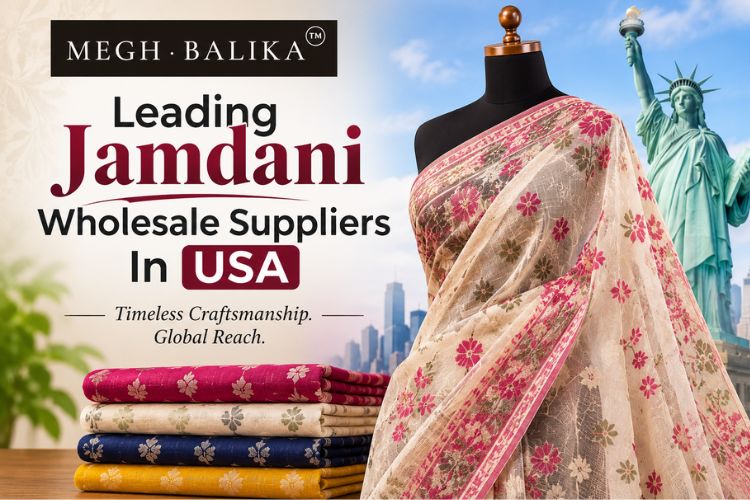
- Megh Balika: Based in Bengal, Megh Balika offers a dedicated Jamdani collection and wholesale enquiries for international buyers. Its export programme provides catalogue, sampling, and shipping information for wholesale partners.
These are potential suppliers to evaluate rather than an independently ranked list. Buyers should confirm stock availability, manufacturing origin, minimum quantities, and delivery terms before ordering.
How Can Buyers Identify Authentic Handwoven Jamdani?
Traditional Jamdani is a handloom weaving tradition distinguished by intricate motifs created using a supplementary or discontinuous-weft technique. UNESCO recognizes its cultural importance and traditional craftsmanship.
Before confirming a wholesale order, request:
- Clear photographs of the front and reverse sides of the fabric.
- Video evidence of the weaving process where available.
- Written fibre-composition and manufacturing-origin details.
- Information about weaving techniques, finishing, and dimensions.
- Relevant handloom, silk, or geographical-origin documentation.
Never assume that a saree is pure silk or entirely handwoven simply because its product description uses traditional textile terminology. Verify the exact specifications for each design.
What Should Importers Check Before Bulk Ordering?
U.S. buyers should evaluate the complete landed cost rather than comparing the supplier’s unit price alone. International freight, customs duties, brokerage charges, insurance, and domestic delivery can affect profitability.
Also, U.S. textile labelling requirements generally require appropriate fibre-content, country-of-origin, and manufacturer or responsible-business identification. Applicable care instructions must also be considered. Consult the Federal Trade Commission and U.S. Customs and Border Protection before shipping.
Ask suppliers for commercial invoices, packing lists, applicable certificates of origin, and accurate manufacturer details. Confirm the appropriate HTS classification and current duty with a qualified customs broker.
Why Choose a Reliable Jamdani Wholesale Partner?
A dependable supplier should offer clear communication, consistent product specifications, transparent quotations, reasonable sampling arrangements, and dependable export documentation.
For boutique owners evaluating a jamdani importer USA sourcing partner, Megh Balika offers a curated Jamdani collection through its Bengal-based textile business.
Request product photographs, samples, fibre details, minimum order quantities, and delivery quotations before committing to a large shipment. Starting with a carefully evaluated sample order can help businesses reduce sourcing risks and build stronger supplier relationships.
Frequently Asked Questions
Can U.S. retailers import Jamdani directly from India?
Yes. U.S. businesses can source directly from Indian wholesale suppliers, subject to applicable customs, documentation, and textile-labelling requirements.
Is every Jamdani saree handwoven?
No. Buyers should verify the actual weaving technique and manufacturing process rather than relying exclusively on product descriptions.
What should a Jamdani importer request before ordering?
Request samples, fibre specifications, manufacturing details, wholesale pricing, export documentation, minimum order quantities, and estimated delivery arrangements.
Build Your Jamdani Wholesale Collection with Megh Balika
Bringing traditional Jamdani craftsmanship to the American market requires a sourcing partner that understands quality, textile heritage, and wholesale requirements.
Explore Megh Balika’s Jamdani collection and contact the team for wholesale enquiries, product information, and international sourcing assistance.
Also Read: Benefits of Buying from a Jamdani Textile Supplier
Blog Development Credits:
This article was developed by Megh Balika, supported by AI-assisted research and drafting, then refined through human review, SEO enhancement, and final content optimization.