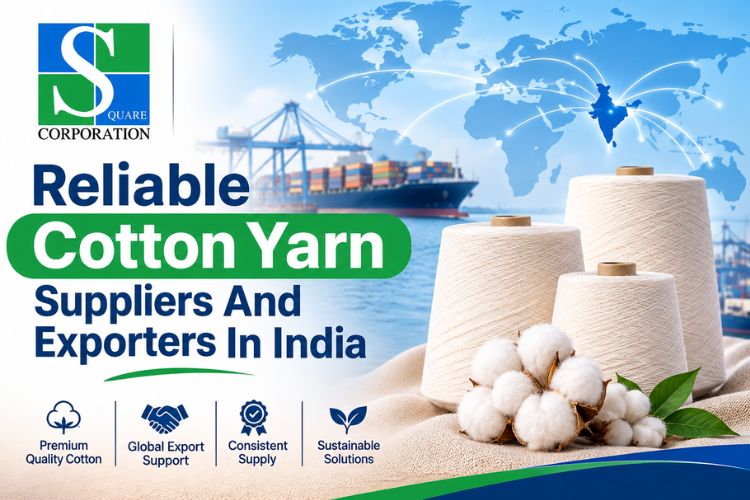
Reliable cotton yarn suppliers in India help international textile businesses maintain product quality, production consistency and dependable supply chains. However, selecting an exporter requires more than comparing quotations. Buyers must examine yarn specifications, manufacturing capabilities, quality testing, certifications and international shipping experience before placing bulk orders.
India offers a diverse textile manufacturing ecosystem, making it an important sourcing destination for global buyers. Businesses looking for experienced Cotton Yarn Exporters should prioritise suppliers that can meet specific technical requirements while maintaining consistent quality across repeated shipments.
Also Read: How to Reduce Fabric Wastage in Cotton Garment Manufacturing
Why India Is an Important Cotton Yarn Sourcing Market
India has an established cotton spinning industry supported by manufacturing clusters, skilled textile professionals and an extensive supply network. Its exporters serve garment manufacturers, knitting units, weaving mills and home textile businesses across international markets.
According to the Ministry of Textiles, exports of cotton yarn, fabrics, made-ups and handloom products collectively reached ₹1,02,399.7 crore in FY 2025–26, showing 0.4% growth over the previous financial year. This demonstrates the continuing importance of India’s cotton textile export sector.
International buyers can source different varieties, including carded cotton yarn, combed cotton yarn, compact yarn, open-end yarn, slub yarn, organic cotton yarn and blended yarn.
What Makes a Cotton Yarn Supplier Reliable?
1. Consistent Yarn Quality and Specifications
Quality consistency is essential when selecting cotton yarn manufacturers and exporters. Buyers should evaluate yarn count, fibre composition, twist, tensile strength, elongation, evenness and hairiness according to their intended manufacturing application.
For example, knitting and weaving operations may require different yarn characteristics. A supplier should therefore understand the buyer’s production requirements and provide appropriate technical specifications before confirming an order.
Requesting representative samples and laboratory test reports helps buyers compare actual product performance with their required standards. ICAR-CIRCOT provides testing facilities for parameters such as yarn count, strength, twist and evenness.
2. Manufacturing Capacity and Production Consistency
A reliable exporter should demonstrate the ability to fulfil the required order quantity within an agreed production schedule. Evaluate machinery, available spinning capacity, quality-control procedures, raw material sourcing and experience in handling repeat orders.
Buyers should also distinguish between actual available production capacity and a company’s advertised maximum capacity. A factory visit or third-party manufacturing audit can provide additional confidence.
3. Certifications and Sustainable Sourcing
For businesses purchasing sustainable cotton yarn, certification and traceability deserve particular attention. Depending on the product and sourcing requirements, buyers may consider GOTS or other relevant sustainability standards.
Always examine the certification scope, validity, certified product category and supply-chain documentation. A supplier’s general certification claim does not automatically establish that every shipment contains certified material. For certified products, request the applicable shipment-specific Transaction Certificate.
For buyers comparing organic sourcing options and supima cotton suppliers in india, verifying fibre identity, origin and certification separately is equally important.
4. Export Documentation and International Delivery
Experienced cotton yarn exporters should understand international shipping procedures, packaging requirements and destination-specific documentation. Buyers should confirm the exporter’s valid Importer Exporter Code (IEC), commercial invoice, packing list, shipping bill and applicable transport documents.
Also discuss shipment schedules, packaging specifications, payment conditions, delivery responsibilities and procedures for handling quality discrepancies before finalising the purchase.
How to Evaluate Cotton Yarn Exporters Before Ordering
A structured purchasing process reduces sourcing risks and improves long-term supplier relationships. Consider these practical steps:
- Share the required yarn count, composition, spinning type and application.
- Request product samples and technical data sheets.
- Compare laboratory results against agreed specifications.
- Verify company credentials and applicable certifications.
- Confirm production availability, minimum order quantities and delivery timelines.
- Approve a sample or trial order before moving to regular bulk procurement.
Rather than selecting the lowest quotation, assess the complete procurement cost, including product consistency, transportation, potential wastage and delivery reliability.
Sourcing Cotton Yarn with Square Corporation
Square Corporation offers textile sourcing solutions covering conventional, organic, BCI, value-added, blended and melange yarn categories. Its published yarn portfolio includes grey cotton yarn, slub yarn, organic yarn and several specialty blends. The company also describes quality-assurance procedures involving cargo, packaging and fabric-stage inspections.
For international manufacturers and wholesale buyers, understanding the product range and confirming the relevant technical and certification documentation are important steps before ordering. Square Corporation can be approached to discuss cotton yarn requirements, sourcing specifications and bulk supply enquiries.
Frequently Asked Questions
How can international buyers identify reliable cotton yarn exporters in India?
Check business credentials, manufacturing or sourcing capabilities, laboratory reports, certification documents, export experience and delivery performance. Approve samples before committing to large orders.
What factors affect cotton yarn quality?
Important factors include fibre composition, yarn count, strength, twist, evenness, hairiness and contamination levels. The appropriate specifications depend on the intended fabric and manufacturing process.
Do cotton yarn exporters provide organic and BCI yarn?
Yes, some Indian suppliers offer organic and BCI-related cotton yarn options. Buyers should verify the applicable certification, product scope and shipment-level traceability before making sustainability claims.
Final Thoughts
Finding reliable cotton yarn suppliers and exporters in India requires a balanced assessment of technical quality, manufacturing capability, sustainability credentials and export readiness. A supplier that understands product specifications and maintains consistent quality can become a valuable long-term sourcing partner.
Square Corporation supports textile sourcing requirements through its diverse yarn portfolio and sourcing services. International buyers can connect with the company to discuss product specifications, bulk requirements and suitable cotton yarn sourcing solutions.
Also Read: How BCI Yarn Supports Sustainable Textiles
Blog development Credits:
This article was developed for Square Corporation, combining original research with AI-assisted drafting and receiving final human-led SEO refinement and content optimization from the same team.