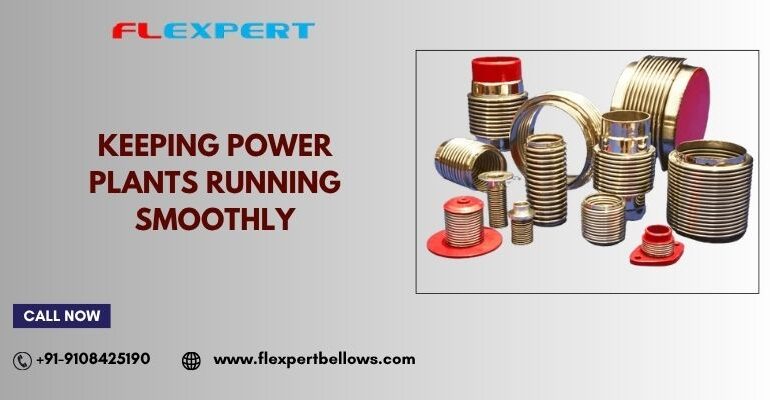
Power plants are built to handle enormous pressure, heat, and nonstop operational demand. Yet, surprisingly, some of the most important components inside these facilities are not the giant turbines everyone notices they are the smaller engineering elements quietly protecting the entire system. One of those overlooked heroes is the expansion bellows, a component that plays a far bigger role than most people realize.
Whether in thermal, nuclear, or renewable energy facilities, piping systems constantly expand and contract due to temperature fluctuations. Without a flexible solution to absorb that movement, even high-grade pipelines can develop stress cracks, leaks, or alignment issues over time. That’s where industrial expansion joints become absolutely essential.
Why Power Plants Face Constant Mechanical Stress?
Inside a power plant, temperatures can change rapidly within hours or sometimes minutes. Steam pipelines, exhaust systems, cooling circuits, and gas transfer lines all experience thermal movement. Metals naturally expand when heated and contract when cooled. It sounds simple, but in large-scale facilities, those tiny dimensional shifts create massive force.
According to information published by the U.S. Department of Energy, thermal stress and vibration are among the leading contributors to fatigue-related failures in industrial piping systems. In power generation environments operating around the clock, even minor stress accumulation can eventually trigger expensive shutdowns.
The Hidden Risks of Rigid Piping
Without flexibility in the system, operators may encounter:
- Pipe deformation caused by repeated expansion cycles
- Equipment misalignment near turbines and pumps
- Joint leakage under fluctuating pressure conditions
- Increased vibration damage to connected machinery
This is precisely why stainless steel bellows and thermal expansion compensators have become standard in modern plant engineering.
How Expansion Bellows Protect Critical Equipment?
Think of expansion bellows almost like shock absorbers in a vehicle. Roads are never perfectly smooth, and without suspension, the entire car would suffer continuous impact. Power plants work in a similar way. Pressure surges, heat variation, and vibration need controlled flexibility to prevent structural strain.
Expansion bellows absorb axial, lateral, and angular movement within piping systems. More importantly, they reduce stress transfer to expensive equipment such as turbines, boilers, condensers, and heat exchangers.
Where They Are Commonly Installed?
- Steam transmission pipelines
- Boiler outlet connections
- Flue gas ducting systems
- Cooling water circulation lines
- Turbine exhaust systems
Each of these applications deals with continuous thermal cycling, making flexible piping components a necessity rather than an optional upgrade.
Modern Power Plants Demand Better Reliability
Downtime in a power plant is extremely expensive. In some cases, even a few hours of unplanned maintenance can disrupt electricity supply contracts and increase operational losses dramatically.
That pressure for reliability has changed how plant operators approach maintenance planning. Instead of replacing failed components reactively, many facilities now focus on predictive reliability engineering.
A trusted expansion bellows manufacturer often works closely with plant engineers to design systems capable of handling specific pressure ratings, movement ranges, and corrosive operating conditions. Customization matters because no two facilities operate under exactly the same environment.
Features Engineers Usually Prioritize
- High fatigue-cycle durability
- Resistance to steam corrosion and chemical exposure
- Leak-proof welded construction
- Minimal maintenance requirements
Interestingly, lifecycle performance has become just as important as upfront cost. Many operators now prefer premium industrial bellows systems if they reduce shutdown frequency over the long term.
Material Selection Makes a Big Difference
Not all expansion bellows are built from the same materials. Power plants often operate under extreme temperatures that standard metals simply cannot tolerate for extended periods.
For this reason, manufacturers frequently use stainless steel grades, Inconel alloys, or Hastelloy materials depending on the plant environment. Nuclear and thermal facilities, in particular, demand exceptionally high resistance to pressure and thermal fatigue.
The American Society of Mechanical Engineers (ASME) continues emphasizing strict material and pressure standards for industrial piping systems because reliability failures in energy infrastructure can have widespread consequences.
Maintenance Teams Are Paying More Attention to Flexibility
One subtle shift happening across the power industry is the growing focus on piping flexibility during plant upgrades. Maintenance engineers increasingly understand that rigid systems create hidden operational risks over time.
That’s why many technical teams also review connector compatibility during system redesign projects. Resources such as How to Choose the Right Flexible Connector for an Industrial Piping System? are becoming useful references during equipment planning and retrofitting discussions.
It may sound overly technical from the outside, but inside a power plant, flexibility engineering often determines whether systems run smoothly for decades—or suffer recurring maintenance interruptions.
Frequently Asked Questions
1. Why are expansion bellows important in power plants?
Expansion bellows absorb thermal movement, vibration, and pressure fluctuations, helping prevent pipeline damage and equipment stress in power generation systems.
2. What materials are commonly used for power plant bellows?
Stainless steel, Inconel, and Hastelloy alloys are commonly used because they withstand high temperatures, pressure, and corrosion.
3. Do expansion bellows reduce maintenance costs?
Yes. Properly designed bellows systems help reduce vibration damage, leaks, and piping fatigue, which lowers unexpected maintenance and downtime expenses.
4. Where are expansion bellows installed in a power plant?
They are commonly installed in steam pipelines, boiler outlets, turbine exhaust systems, cooling circuits, and flue gas ducts.
Final Thoughts
Expansion bellows may not attract much attention compared to massive turbines or generators, yet they quietly protect some of the most demanding systems inside a power plant. Their ability to absorb movement, reduce stress, and improve reliability makes them indispensable in modern energy infrastructure. As power facilities continue evolving toward higher efficiency and longer operational life, these flexible components will only become more important.