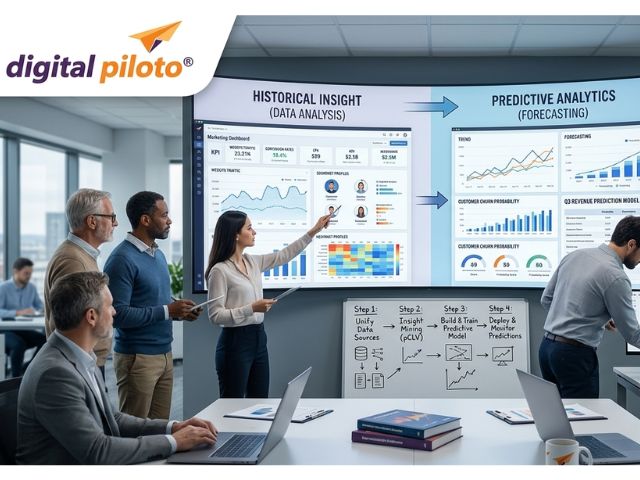
Data-driven digital marketing means using real customer data to guide decisions, optimize campaigns, and predict future outcomes. Instead of guessing what works, marketers rely on analytics, behavioral patterns, and AI models to improve targeting and ROI. Businesses partnering with a Digital Marketing Company in Durgapur are increasingly shifting from reactive campaigns to predictive strategies that anticipate customer needs before they arise.
What Is Data-Driven Digital Marketing? (Definition)
Data-driven digital marketing is the practice of collecting, analyzing, and applying data insights to improve marketing performance and decision-making.
- Uses customer behavior data to guide campaigns
- Relies on analytics tools for performance tracking
- Focuses on measurable outcomes like ROI and conversions
- Enables personalization at scale
In essence, it replaces assumptions with evidence-backed strategy.
Why Data Matters More Than Ever
Digital ecosystems today are noisy and competitive. Without data, marketing becomes guesswork—and guesswork is expensive. Data gives clarity.
From my experience, brands that truly leverage data don’t just improve campaigns—they transform how they understand customers. They stop asking “What should we do?” and start asking “What is the data telling us?”
From Insights to Strategy: The Real Shift
Collecting data is easy. Turning it into actionable strategy is where most businesses struggle. The shift happens when insights start influencing decisions.
Raw Data vs Actionable Insights
- Raw Data: Numbers, clicks, impressions
- Insights: Patterns, behaviors, trends
- Strategy: Decisions based on those insights
For example, knowing that users drop off on a checkout page is data. Understanding why they leave—and fixing it—is strategy.
How Predictive Marketing Works (Step-by-Step)
- Data Collection: Gather data from websites, CRM systems, social platforms, and ads.
- Data Analysis: Identify trends, user behavior, and conversion patterns.
- Segmentation: Group users based on demographics, behavior, and intent.
- Predictive Modeling: Use AI to forecast future actions like purchases or churn.
- Campaign Execution: Deliver personalized campaigns based on predictions.
- Optimization: Continuously refine strategies using real-time feedback.
This cycle is continuous—predict, act, learn, and improve.
Key Components of a Data-Driven Strategy
1. Customer Data Platforms (CDPs)
These unify data from multiple sources into a single view of the customer. This is where true personalization begins.
2. Advanced Analytics
Tools like Google Analytics 4 and BI dashboards help marketers move beyond surface-level metrics.
3. AI and Machine Learning
AI identifies patterns humans might miss. It powers predictive insights, recommendation engines, and automated decisions.
Many brands working with the Best Digital Marketing Service In India are already integrating AI into their core marketing workflows.
4. Real-Time Data Processing
Modern marketing isn’t static. Real-time data allows instant campaign adjustments based on user behavior.
Benefits of Predictive Digital Marketing
- Higher Conversion Rates: Target users at the right moment
- Improved Customer Retention: Predict and prevent churn
- Better ROI: Allocate budget more effectively
- Enhanced Personalization: Deliver relevant experiences
In practical terms, predictive marketing reduces waste and increases precision.
Common Challenges (And Honest Truths)
- Data silos across platforms
- Poor data quality or incomplete tracking
- Over-reliance on tools without strategy
- Lack of skilled analysts
Here’s the reality: tools don’t create strategy—people do. Data is only as powerful as the thinking behind it.
Real-World Use Cases
eCommerce
Predict which products a user is likely to buy and show personalized recommendations.
Lead Generation
Score leads based on behavior and prioritize high-intent prospects.
Email Marketing
Send emails at the exact time a user is most likely to open them.
These are not future concepts—they’re already being used by smart brands.
Best Practices for Implementation
- Start with clear goals, not tools
- Focus on high-quality data collection
- Invest in analytics and skilled talent
- Test continuously and iterate quickly
Small improvements, when driven by data, compound over time.
FAQs
What is data-driven digital marketing?
It is a strategy that uses customer data and analytics to guide marketing decisions and improve performance.
How does predictive marketing work?
It uses historical data and AI models to forecast future customer behavior and optimize campaigns accordingly.
Why is data important in digital marketing?
Data provides insights into customer behavior, helping marketers make informed decisions and improve ROI.
What tools are used in data-driven marketing?
Common tools include Google Analytics, CRM systems, data visualization tools, and AI-based platforms.
Can small businesses use predictive marketing?
Yes, many affordable tools allow small businesses to leverage data and implement predictive strategies effectively.
Conclusion
Data-driven marketing isn’t about having more data—it’s about using it smarter. The real advantage comes when insights evolve into predictions and predictions drive action. Businesses that embrace this shift don’t just react to trends—they stay ahead of them.
Blog Development Credits:
This piece was originally envisioned by Amlan Maiti, developed with research powered by AI tools like ChatGPT, Gemini, and Copilot, and refined for performance by Digital Piloto Private Limited.