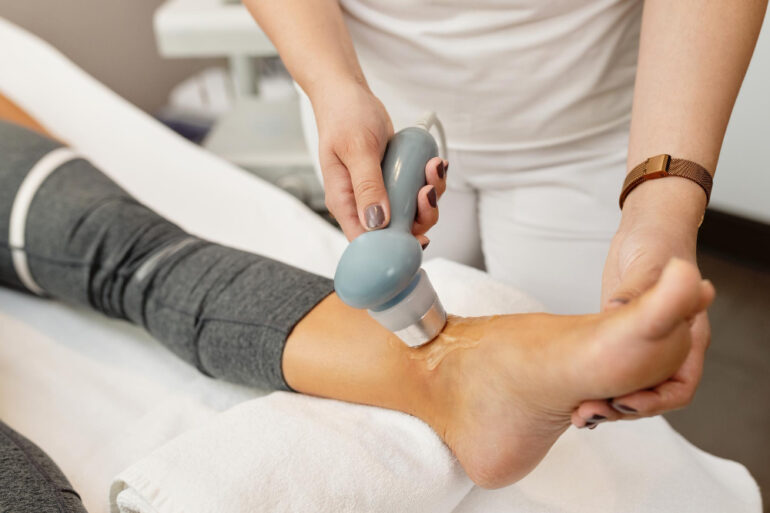
Your ankle rolls unexpectedly, especially on uneven ground, stairs, or while walking quickly-and suddenly you are wondering, “Why does this keep happening?” Repeated ankle twisting is not always bad luck. Previous sprains, weak supporting muscles, poor balance, or an underlying foot problem can all play a role. In Kolkata’s busy streets and uneven walking surfaces, stability matters.
If your ankle repeatedly feels loose or unstable, an evaluation by a foot and ankle specialist in Kolkata can help identify what is actually going wrong instead of simply treating each new twist as an isolated injury.
What Causes an Ankle to Keep Twisting?
The ankle is supported by strong ligaments, muscles, tendons, and the bones of the foot and lower leg. When these structures work together properly, they help keep you steady. But after an ankle sprain, the ligaments may heal in a stretched or weakened position. That can make the joint feel unreliable.
The American Orthopaedic Foot & Ankle Society notes that repeated sprains are a common cause of chronic ankle instability. Weak muscles and certain foot shapes can also contribute to the problem. FootCareMD explains ankle instability and its causes.
Common reasons include:
- An old ankle sprain: A previous injury may never have fully regained its original strength and control.
- Weak ankle muscles: Muscles around the ankle and lower leg help react quickly when your foot lands awkwardly.
- Poor balance or coordination: Your nervous system needs to sense the position of your foot and make rapid corrections.
- Foot alignment: High arches or other structural differences may increase the tendency for the ankle to roll.
- Inadequate rehabilitation: Feeling better does not necessarily mean the ankle is fully recovered.
Why Does It Happen Even When I’m Just Walking?
This is one of the most frustrating parts. You may not be playing football or running. You might simply be walking through a market, stepping off a pavement, or moving across an uneven surface when the ankle suddenly rolls.
That “giving way” sensation can happen because the ankle has lost some of its ability to respond quickly to changes in position. Repeated episodes can then become a cycle: the ankle twists, becomes irritated, loses strength or confidence, and becomes easier to twist again.
Persistent instability can also occur alongside pain, swelling, stiffness, or difficulty walking on uneven surfaces. These symptoms are worth assessing rather than repeatedly ignoring.
When Should You See a Specialist?
One minor twist does not necessarily mean something serious is wrong. But repeated episodes deserve attention, particularly if you are changing the way you walk because you do not trust the ankle anymore.
- Your ankle has rolled several times in recent months.
- You regularly feel that the joint is “loose” or about to give way.
- Pain or swelling continues after an ankle sprain.
- You struggle on uneven ground, stairs, or during exercise.
- You cannot comfortably put weight on the ankle after an injury.
A podiatrist in Kolkata or appropriate foot and ankle specialist can assess your walking pattern, ankle movement, muscle strength, balance, and previous injury history. Depending on the findings, imaging such as an X-ray or, in selected cases, MRI or other scans may be considered.
Can Repeated Ankle Twisting Be Prevented?
Often, yes. The solution is usually more than simply wearing a brace whenever you leave home. The goal is to rebuild strength, mobility, balance, and confidence in the ankle.
A practical prevention approach
- Strengthen gradually: Resistance-band exercises can help build the muscles supporting the ankle.
- Work on balance: Single-leg standing and other controlled balance exercises can improve coordination.
- Choose supportive footwear: Shoes with good support and a stable heel can be helpful, particularly while recovering.
- Return to activity slowly: Jumping straight back into running or sport after pain settles can invite another injury.
Balance and strengthening exercises are commonly included in ankle rehabilitation, and the AOFAS recommends progressing activities as strength and control return.
What Happens If You Keep Ignoring It?
It can be tempting to think, “It only twists sometimes.” Unfortunately, repeated instability can make future sprains more likely. Ongoing instability may also be associated with chronic pain, reduced mobility, and, over time, degenerative changes in the ankle.
That does not mean every unstable ankle needs surgery. Many people improve with appropriate rehabilitation, strengthening, balance training, and external support when necessary. Surgery is generally considered only when the underlying problem requires it or when suitable non-surgical treatment has not provided enough stability.
Frequently Asked Questions
1. Why does my ankle keep rolling outward?
Repeated outward rolling is often associated with weakness or damage involving the structures on the outer side of the ankle. A previous sprain is a common reason, but foot alignment and muscle weakness can also contribute.
2. Can a weak ankle become strong again?
In many cases, yes. A structured rehabilitation programme focusing on strength, flexibility, balance, and coordination can improve ankle function. The right exercises depend on the injury and should be progressed gradually.
3. Should I wear an ankle brace all the time?
Not necessarily. A brace may provide useful support during certain activities or while recovering from instability, but it should not automatically replace rehabilitation. Your clinician can advise when and how long to use one.
4. When is an ankle injury an emergency?
Seek urgent medical attention if an injury causes obvious deformity, severe uncontrolled pain, or other signs suggesting a serious injury. If you cannot bear weight or have substantial swelling or bruising, medical assessment is also advisable.
Final Thoughts
An ankle that repeatedly twists is usually giving you useful information: something about its strength, stability, movement, or previous injury may need attention. Rather than adapting your life around an unreliable ankle, consider getting it properly assessed. With the right diagnosis and rehabilitation plan, many people can return to walking, exercising, and everyday Kolkata life with much greater confidence.