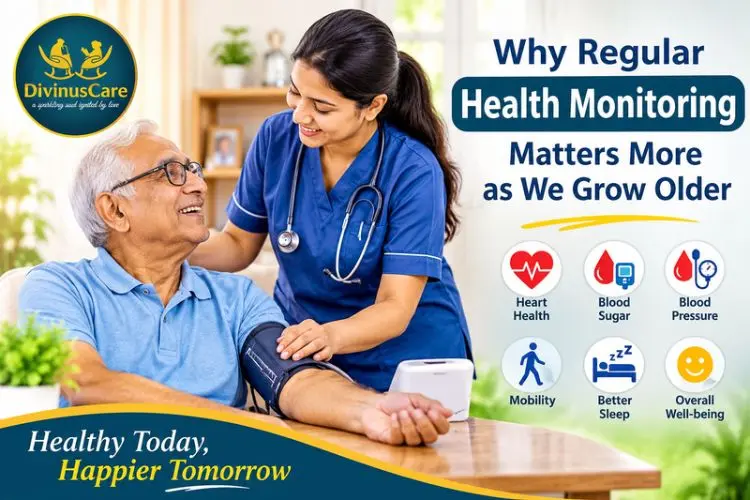
DivinusCare believes that staying healthy in later life involves more than visiting a doctor when something goes wrong. Regular health monitoring helps older adults identify potential health concerns early, understand changes in their bodies, and make informed decisions about their well-being. Consistent observation can prevent minor concerns from becoming serious complications and support a safer, more independent life at home.
As people age, their health requirements gradually change. Conditions such as high blood pressure, diabetes, arthritis, and heart disease may require closer attention. This is why health care for senior citizens should include regular monitoring rather than depending entirely on occasional medical appointments.
What Does Regular Health Monitoring Mean for Older Adults?
Regular health monitoring is the ongoing observation and assessment of a person’s physical health to identify changes, manage existing conditions, and recognise potential warning signs.
It involves more than checking blood pressure or measuring blood sugar. It also means paying attention to everyday changes that families sometimes overlook, particularly when an older person does not openly discuss discomfort.
Depending on individual health requirements, monitoring may include:
- Blood pressure: Tracking readings to identify unusual changes and support hypertension management.
- Blood glucose: Monitoring sugar levels for individuals living with diabetes.
- Heart health: Observing pulse rate and discussing unusual symptoms with healthcare professionals.
- Weight changes: Noticing unexpected weight loss or gain that may indicate an underlying concern.
- Mobility and balance: Identifying increasing difficulty with walking, standing, or everyday movement.
- Sleep and appetite: Recognising changes that may affect energy, nutrition, and overall well-being.
The important point is consistency. A single normal reading does not always provide a complete picture of someone’s health. Observing patterns over time gives healthcare professionals more useful information.
Why Does Health Monitoring Become More Important With Age?
Ageing affects different people in different ways. Some remain physically active well into their eighties, while others experience changes in mobility or develop long-term medical conditions earlier. However, certain age-related changes make regular observation particularly valuable.
1. Health Problems May Develop Without Obvious Symptoms
Not every health concern announces itself through pain or visible discomfort. High blood pressure, for example, can remain unnoticed for years. Similarly, gradual changes in blood glucose may not produce symptoms that an older person immediately recognises.
Routine monitoring helps identify concerning patterns that might otherwise remain unnoticed until complications develop. It does not replace medical diagnosis, but it gives families and doctors an opportunity to respond sooner.
2. Existing Medical Conditions Need Consistent Attention
Managing a long-term condition is rarely a one-time task. An older adult with diabetes may need regular glucose monitoring, medication reviews, and dietary guidance. Someone with hypertension may require periodic blood pressure checks and adjustments to their treatment plan.
Without consistent observation, small changes can go unnoticed. Keeping reliable health records helps doctors understand whether an existing treatment is working as expected.
3. Small Physical Changes Can Affect Everyday Independence
Consider an older parent who has recently started walking more slowly, avoiding stairs, or feeling unusually tired. These changes might initially appear to be ordinary signs of ageing.
However, they can sometimes be associated with medication effects, nutritional deficiencies, cardiovascular concerns, or other health issues. Recognising these changes early can help families seek appropriate medical advice before daily activities become increasingly difficult.
Which Health Changes Should Families Watch For?
Families do not need medical training to notice that something is different. They simply need to understand what is normal for their loved one and pay attention when that pattern changes.
Some useful signs to observe include:
- Repeated dizziness, headaches, or unexplained weakness.
- Sudden changes in appetite, sleep, or body weight.
- Increased confusion or unusual changes in behaviour.
- Difficulty maintaining balance or completing familiar activities.
- Unusual breathlessness or reduced tolerance for physical activity.
- Repeated missed medications or difficulty following treatment instructions.
These signs do not automatically indicate a serious illness. However, persistent, new, or worsening symptoms deserve medical attention. Sudden chest pain, severe breathing difficulty, signs of stroke, or loss of consciousness require immediate emergency assistance.
How Can Families Build a Practical Health Monitoring Routine?
A useful monitoring routine should be simple enough to maintain over months and flexible enough to accommodate changing health needs. The objective is not to turn everyday life into a medical exercise. It is to make important health information easier to track and communicate.
Step 1: Understand Existing Health Conditions
Start by discussing medical history, current diagnoses, medications, allergies, and previous health concerns with the treating doctor. Ask which measurements need regular monitoring and how frequently they should be checked.
Step 2: Maintain a Simple Health Record
Record relevant readings, medication changes, symptoms, and medical appointments in a notebook or digital health diary. Include dates so that doctors can identify patterns rather than relying on memory alone.
Step 3: Observe Everyday Behaviour
Pay attention to changes in eating habits, walking ability, sleep quality, mood, and energy. These observations can be just as useful as numerical readings when discussing an older person’s health.
Step 4: Follow Up With Healthcare Professionals
Share concerning observations and monitoring records during medical consultations. Never change prescribed medication or treatment based only on home readings without appropriate medical advice.
Step 5: Review the Routine Regularly
Health requirements can change following an illness, hospital discharge, surgery, or medication adjustment. Review the monitoring plan with the doctor whenever circumstances change.
How Professional Support Makes Health Monitoring Easier
Maintaining a consistent routine can become challenging when family members have work commitments, live in another city, or cannot visit their elderly parents every day. Even families living together may struggle to keep track of appointments, medication schedules, and health observations.
This is where organised support can make a meaningful difference. Depending on the person’s needs, a trained nurse or care professional can assist with appropriate health observations, medication-related support, basic clinical care, and communication with family members.
Families exploring the best elder care services in Kolkata should look beyond the availability of assistance alone. It is worth understanding how the provider coordinates care, communicates observations, respects personal routines, and responds when a senior’s needs change.
DivinusCare focuses on coordinating personalised support for older adults and helping families manage their changing care requirements. For families who need additional assistance during urgent situations, access to an emergency medical service Kolkata support arrangement can also help them navigate stressful circumstances.
Professional monitoring does not mean replacing doctors or expecting a care provider to diagnose medical conditions. Its value lies in maintaining continuity, noticing relevant changes, and helping families communicate concerns to the appropriate healthcare professionals.
Frequently Asked Questions
Q. How often should senior citizens monitor their health?
A. The frequency depends on age, existing medical conditions, medications, and individual risk factors. Some people may need daily blood glucose checks, while others may require periodic blood pressure monitoring. A doctor should recommend an appropriate schedule.
Q. Which health parameters should be monitored in older adults?
A. Common parameters include blood pressure, blood glucose when indicated, weight, pulse, mobility, appetite, sleep, and medication-related concerns. The monitoring plan should reflect the individual’s medical history.
Q. Can regular health monitoring prevent serious illnesses?
A. Monitoring cannot prevent every illness, but it can help identify warning signs and changes earlier. Timely medical evaluation may reduce the risk of certain complications and improve the management of existing conditions.
Q. Is home health monitoring reliable for elderly people?
A. Yes, when suitable devices are used correctly and readings are interpreted appropriately. Home monitoring can provide useful information between medical appointments, but it should complement rather than replace professional healthcare.
Q. Do elderly people need health monitoring even when they feel healthy?
A. Yes. Some conditions develop without noticeable symptoms. Routine preventive check-ups and monitoring based on individual medical needs can help identify potential concerns before they become more difficult to manage.
Conclusion: Consistency Makes the Difference
Growing older does not automatically mean losing control over one’s health or independence. Often, the difference lies in noticing small changes, maintaining appropriate health records, and seeking medical advice at the right time.
For families, regular health monitoring is a practical way to stay informed and make better decisions about an ageing loved one’s care. With consistent attention and the right professional support, older adults can approach each stage of life with greater confidence, comfort, and dignity.
Blog Development Credit
This article was crafted using insights from advanced AI research platforms such as ChatGPT and Google Gemini. The content strategy, SEO optimization, editorial refinement, and final publishing were managed by DivinusCare, ensuring that the content delivers meaningful information, practical guidance, and valuable insights for families seeking reliable senior healthcare support.