
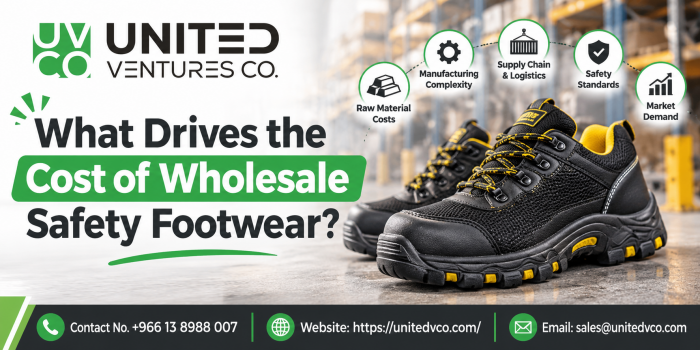
Buying protective footwear in bulk sounds straightforward until you start comparing supplier quotations. Why does one pair cost considerably more than another, even when both look similar? In Saudi Arabia, where industrial operations face demanding working conditions, understanding the factors behind safety shoes wholesale pricing helps businesses balance procurement budgets with employee protection.
1. Material Quality Makes a Noticeable Difference
The materials used in manufacturing safety footwear are among the biggest contributors to its price. A shoe designed for occasional warehouse duties does not necessarily require the same construction as one intended for heavy industrial operations, construction sites, or oil and gas facilities.
For example, genuine leather generally costs more than basic synthetic alternatives. However, it can offer durability, flexibility, and resistance to everyday workplace wear. Similarly, high-quality rubber outsoles may provide better grip and resistance to abrasion than lower-grade materials.
When evaluating wholesale safety footwear, buyers should examine:
- Upper material: Leather, synthetic fabrics, and specialised materials influence durability and comfort.
- Outsole composition: Rubber, polyurethane, and dual-density soles have different performance characteristics.
- Stitching and construction: Reinforced seams and strong bonding can improve product longevity.
- Protective components: Steel, aluminium, or composite toe caps affect manufacturing costs.
A cheaper material might reduce the initial purchase price, but frequent replacements can make it more expensive over time.
2. Safety Standards and Certifications Affect Pricing
Not every protective shoe offers the same level of workplace protection. Products manufactured to recognised safety standards generally require additional testing, quality controls, and compliance measures. These requirements can influence their final wholesale price.
For businesses operating in Saudi Arabia, checking compliance with applicable Saudi standards and technical regulations is particularly important. Depending on the product and intended application, buyers may also encounter international standards such as EN ISO 20345 and ASTM F2413.
These standards address different protective footwear requirements, including impact protection and other occupational hazards. Additional features, such as electrical hazard protection, puncture resistance, and slip resistance, may also increase manufacturing complexity.
It is worth checking the manufacturer’s technical documentation rather than assuming that a higher price automatically means better protection. Certification, product specifications, and suitability for the intended workplace should guide the decision.
3. Design and Protection Features Influence the Final Cost
Two pairs of industrial footwear can look almost identical while offering very different protection. The difference often comes down to their design and built-in features.
Consider a construction worker handling heavy materials compared with a warehouse employee spending most of the day walking across smooth indoor floors. Their footwear requirements are unlikely to be identical.
Common features that can influence pricing include:
- Toe protection: Steel and composite toe caps protect against impact and compression hazards.
- Puncture-resistant midsoles: Help protect workers from sharp objects underfoot.
- Slip-resistant outsoles: Improve traction on potentially slippery surfaces.
- Heat-resistant soles: Provide additional protection in workplaces exposed to elevated temperatures.
- Water-resistant construction: Helps keep feet protected in damp working environments.
Additional protection generally involves more specialised materials and manufacturing processes. Therefore, businesses should identify actual workplace hazards before selecting products. Our guide on Why Every Industrial Workplace Needs Task-Specific Protective Footwear explains why choosing footwear according to job requirements matters.
4. Wholesale Order Volume and Supplier Pricing
Quantity is another important factor. Generally, purchasing larger volumes can help businesses negotiate better per-pair rates because suppliers can manage inventory, packaging, and distribution more efficiently.
However, bulk discounts are not always automatic. They depend on the supplier’s stock availability, manufacturing capacity, product range, and commercial terms.
For example, a contractor purchasing 500 pairs for a construction project may receive a different quotation from a company ordering 50 pairs for a small maintenance team.
Before finalising a bulk safety footwear order, consider:
- Requesting quotations for different quantity brackets.
- Checking whether mixed sizes are available within the same order.
- Confirming stock availability for future replacements.
- Comparing delivery charges and payment conditions.
- Asking about repeat-order discounts and long-term supply agreements.
A reliable supplier should offer pricing that makes commercial sense without compromising product suitability.
5. Saudi Arabia’s Climate and Working Conditions
Local operating conditions deserve particular attention when purchasing protective footwear in Saudi Arabia. High summer temperatures, dusty environments, and demanding outdoor work can influence the type of footwear businesses need.
For workers operating at construction sites, industrial plants, and logistics facilities, comfort is not simply an added benefit. It can affect how consistently employees wear their protective equipment throughout a shift.
Breathable linings, moisture-managing materials, cushioned insoles, and ergonomic construction may increase product costs. Nevertheless, these features can make a meaningful difference during extended working hours.
Companies should also consider the specific demands of their industries. Oil and gas operations, for instance, may require specialised footwear with particular resistance properties, while warehouse environments may prioritise grip, flexibility, and lightweight construction.
6. Transportation, Import Duties, and Distribution Costs
The price quoted by a manufacturer is not necessarily the final amount a Saudi Arabian buyer pays. Transportation, customs-related expenses, applicable duties, VAT, warehousing, and local distribution can all contribute to the landed cost.
Imported products may also experience pricing fluctuations because of currency movements, international freight rates, and changes in supplier availability.
Businesses should therefore compare the complete quotation rather than focusing exclusively on the listed price per pair. A slightly more expensive local supply arrangement might prove commercially attractive if it offers faster delivery, easier communication, and dependable stock replenishment.
7. Brand Reputation and After-Sales Support
Established manufacturers and suppliers may charge more because of their quality-control processes, product consistency, and technical support. These factors matter when businesses need to maintain uniform safety standards across multiple teams or project locations.
When comparing safety shoes, look beyond brand recognition. Examine product specifications, warranty conditions, replacement availability, and the supplier’s ability to fulfil repeat orders.
A dependable wholesale partner should also help buyers identify appropriate footwear for different workplace applications rather than simply recommending the cheapest available option.
Frequently Asked Questions
1. Why do wholesale safety shoe prices vary between suppliers?
Prices vary because of differences in material quality, protective features, manufacturing standards, brand reputation, order quantities, and distribution costs. Product specifications should always be compared before selecting a supplier.
2. Does ordering safety shoes in bulk reduce the cost per pair?
Usually, yes. Larger orders can qualify for volume-based discounts and more favourable commercial terms. However, the actual savings depend on stock availability, order size, product selection, and supplier policies.
3. Which safety shoe features are important for Saudi Arabian workplaces?
Depending on the workplace hazards, important features may include slip-resistant soles, impact-resistant toe protection, puncture-resistant midsoles, heat-resistant outsoles, and breathable construction for hot working environments.
4. How can businesses choose affordable wholesale safety shoes without compromising quality?
Start by assessing workplace hazards, checking recognised safety standards, comparing material specifications, and requesting bulk quotations. Consider durability and replacement frequency alongside the initial purchase price.
Final Thoughts
Wholesale safety shoe pricing involves much more than the cost of manufacturing a pair of shoes. Materials, protective features, certifications, order quantities, transportation, and supplier reliability all contribute to the final quotation.
For Saudi Arabian businesses, the smartest purchasing decision is not necessarily the one with the lowest upfront price. It is the one that combines appropriate protection, lasting performance, employee comfort, and dependable supply. Taking time to evaluate these factors can help organisations manage procurement expenses while maintaining safer workplaces.

