
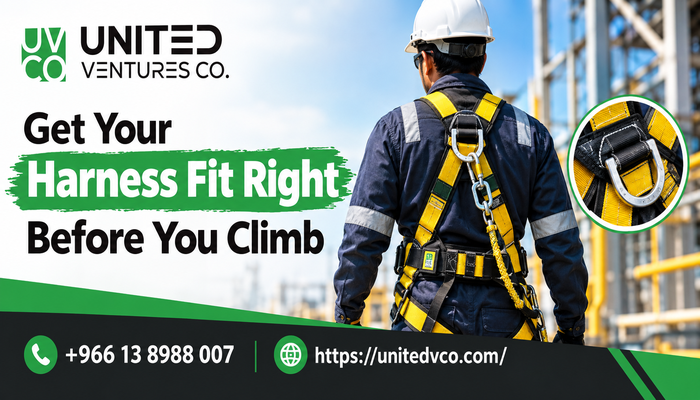
Working at height in Saudi Arabia often means dealing with heat, dust, long shifts, and demanding site conditions. In that environment, a Full Body Harness is more than a piece of PPE—it is part of your fall protection system. But are you sure you are putting it on and adjusting it correctly every time?
Why Proper Harness Fitting Matters?
A full body harness is designed to distribute fall forces across stronger areas of the body, but it can only perform as intended when it fits correctly. A harness that is too loose, twisted, or incorrectly connected can compromise both comfort and protection.
Think of it like wearing a seat belt. Simply having one across your body is not enough; it needs to sit in the right position and remain secure. The same principle applies when preparing for work on scaffolds, towers, elevated platforms, roofs, maintenance structures, or other areas where a fall hazard exists.
How to Put On a Full Body Harness Correctly?
1. Inspect Before Putting It On
Never rush straight into wearing the harness. Start with a careful visual and physical inspection. Look for damaged webbing, broken stitching, distorted metal components, corrosion, or any signs that the equipment has been exposed to excessive heat or chemicals.
- Check the webbing for cuts, burns, fraying, or unusual wear.
- Inspect buckles, D-rings, adjusters, and attachment points.
- Confirm that the harness is clean, dry, and suitable for the planned task.
- Remove equipment from service if its condition is questionable.
This inspection becomes particularly important on busy Saudi construction and industrial sites, where dust, abrasive surfaces, and harsh outdoor conditions can gradually affect PPE.
2. Identify the Front and Back
Hold the harness by its dorsal attachment point, usually the D-ring positioned toward the upper back. Separate the shoulder straps and leg straps so they are not tangled. It may take a few seconds, but untangling the harness before stepping into it makes the fitting process much easier.
3. Put Your Legs Through the Correct Straps
Step into the leg loops one at a time. Pull the harness upward over your body while keeping the straps flat. Avoid allowing the webbing to twist around your legs or hips.
Next, place your arms through the shoulder straps and position the harness so the dorsal D-ring sits approximately between your shoulder blades. It should not be sitting too high around your neck or hanging excessively low down your back.
4. Connect and Adjust Every Buckle
Fasten each buckle according to the manufacturer’s instructions. Then adjust the straps gradually rather than pulling everything tight at once. The goal is a secure fit that keeps the harness correctly positioned without unnecessarily restricting movement.
- Keep shoulder straps flat against the body.
- Adjust leg straps so they are snug but not painfully tight.
- Secure loose strap ends where the harness design allows.
- Make sure buckles are fully engaged before starting work.
Perform a Final Fit Check
Once the harness is adjusted, move your arms, bend your knees, and take a few controlled steps. If the harness shifts significantly, readjust it. A properly fitted Safety Harness should remain properly positioned while allowing the worker to carry out normal movements.
Do not judge the fit only by comfort. A harness can feel comfortable and still be incorrectly positioned. Your supervisor, competent person, or site safety team should provide practical training on fitting, inspection, connection, and the specific fall protection system being used.
Connect the Harness to the Right System
Wearing the harness correctly is only one part of fall protection. The attachment point, lanyard, lifeline, anchor, and other components must be compatible and used according to their manufacturer’s instructions and the site’s fall protection plan.
For example, a worker performing urgent maintenance in an industrial area may face several hazards simultaneously. Understanding the broader risks is useful when reviewing guidance such as Preventing Falls During Emergency Maintenance In Fire-Risk Areas.
Also remember that a harness does not prevent every fall. It is intended to work as part of a properly planned fall protection system. Workers should receive appropriate training before using fall protection equipment, and rescue arrangements should be considered before work begins.
Common Harness-Fitting Mistakes to Avoid
- Skipping the inspection: Even familiar equipment can develop damage between uses.
- Wearing twisted straps: Twisted webbing can affect how the harness sits on the body.
- Leaving straps too loose: Excess movement can cause the harness to shift during a fall.
- Connecting to an unsuitable point: Never improvise an attachment point.
- Ignoring the manufacturer’s instructions: Harness designs differ, so fitting procedures can vary.
FAQs About Wearing a Full Body Harness
1. How tight should a full body harness be?
It should be snug and secure without causing unnecessary discomfort or restricting normal movement. The straps should hold the harness in its intended position.
2. Where should the dorsal D-ring sit?
The dorsal D-ring should generally sit around the upper back, between the shoulder blades. Always follow the specific manufacturer’s fitting instructions.
3. Can I use a damaged harness?
No. If you find cuts, burns, frayed webbing, damaged stitching, corrosion, or other questionable defects, take the harness out of service and have it assessed according to your site’s procedures.
4. Is wearing a harness enough to protect me from a fall?
No. A harness is one component of a complete fall protection system. The anchor, connector, lifeline or lanyard, clearance, equipment compatibility, training, and rescue plan all matter.
Final Thoughts
Putting on a full body harness should become a deliberate routine, not something you do while rushing to start a shift. Inspect it, position it correctly, adjust every strap, check the connection system, and never ignore equipment damage. In Saudi Arabia’s demanding industrial and construction environments, those few extra moments can make a meaningful difference to workplace safety.
Full Audio: Listen Here
