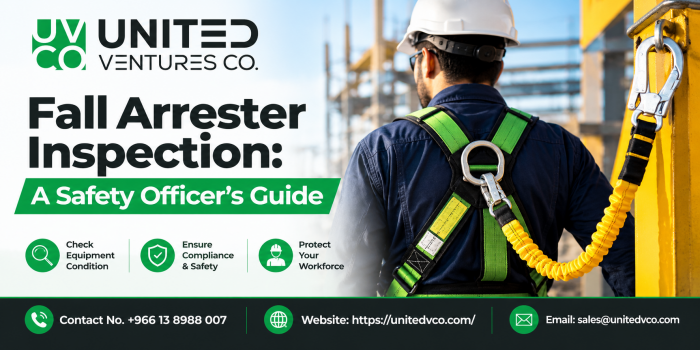
Working at height leaves little room for guesswork. On Saudi construction sites, industrial plants, warehouses, and oil and gas facilities, a small defect in fall protection equipment can have serious consequences. Regular inspections help safety officers identify hidden damage before work begins. But what exactly should they check, and when should equipment be removed from service?
Reliable fall arresters are only effective when they are suitable for the task, correctly fitted, and maintained according to the manufacturer’s instructions. A quick glance at the equipment is not enough. Safety officers need a consistent inspection routine that covers visible wear, mechanical performance, identification labels, and the entire fall protection system. Here is a practical checklist for getting those checks right.
Why Fall Arrester Inspections Matter?
Imagine a maintenance technician climbing an access ladder at a petrochemical facility. The harness looks fine, but its connecting lanyard has damaged stitching that nobody noticed during the previous shift. This is precisely the kind of problem a structured inspection is designed to catch.
According to the US Occupational Safety and Health Administration (OSHA), personal fall arrest systems must be inspected before initial use during each work shift, and defective components must be removed from service. Safety teams can review the requirements in the OSHA fall protection standard. Although Saudi workplaces must follow applicable Saudi regulations and project requirements, this guidance provides a useful reference for establishing a disciplined inspection process.
Fall Arrester Inspection Checklist: What to Verify
1. Examine the Harness Webbing and Stitching
Start with the full body harness. Run your hands and eyes along the webbing, paying particular attention to areas that experience friction or bear loads. Look for cuts, fraying, pulled threads, burns, chemical stains, and unusual discoloration. Industrial environments can expose equipment to oil, solvents, sharp edges, and heat, all of which may weaken materials.
Check load-bearing stitching carefully. Broken, loose, or unravelled stitches are warning signs, even when the rest of the harness appears undamaged. Also inspect buckles, adjustment points, D-rings, and other attachment hardware for cracks, deformation, corrosion, or sharp edges.
2. Check the Lanyard and Connecting Components
The connector between a worker and an anchor point deserves just as much attention as the harness. Inspect the lanyard along its entire length, looking for abrasion, cuts, melted fibres, damaged protective sleeves, or signs of unauthorised repairs. Check hooks and connectors for secure gates, smooth operation, and reliable locking mechanisms.
If the equipment includes a self-retracting lifeline, examine the housing, cable or webbing, connector, and energy-absorbing components according to the manufacturer’s inspection procedure. Where a functional test is permitted, confirm that the device locks and retracts as specified. Never dismantle a fall arrester or improvise a test.
3. Verify Labels, Ratings, and Inspection Records
Equipment without readable identification can create unnecessary uncertainty. Confirm that the manufacturer, model, applicable standards, serial number, and other required markings are legible. Check the manufacturer’s instructions for service-life limits, inspection intervals, and retirement criteria.
Record the inspection date, equipment identification, inspector’s name, findings, and any corrective action. If a component has been involved in a fall or its history is uncertain, quarantine it until a competent person determines its status in accordance with the manufacturer’s instructions and applicable requirements.
4. Confirm Compatibility and Anchor Arrangements
Even sound equipment can fail to protect a worker if the components do not work together. Verify that the harness, connectors, lifeline, and anchorage are compatible and approved for the intended system. Check that the anchorage is suitable for the application and that the setup accounts for fall clearance, swing-fall hazards, and nearby obstructions.
For work on storage tanks, vessels, and elevated process equipment, inspection should include the surrounding work area and the planned rescue arrangements. The practical considerations discussed in Fall Protection During Tank, Vessel, and Elevated Equipment Inspections are particularly relevant when access is restricted or workers operate above hard surfaces.
Field Checks Safety Officers Should Never Skip
A checklist works best when it reflects real working conditions rather than just paperwork. Before authorising a job, safety officers should confirm the following:
- Pre-use inspection: Verify that the worker has checked every component before the shift or task, as required by the applicable procedure.
- Correct fit: Ensure the harness is adjusted securely, with buckles fastened and straps arranged according to the manufacturer’s instructions.
- Environmental exposure: Look for heat damage, contamination, moisture-related deterioration, or wear caused by rough surfaces and repeated use.
- Fall clearance: Confirm that sufficient clearance exists below the worker, accounting for the system configuration and manufacturer-specified requirements.
- Rescue readiness: Check that a suitable rescue plan, trained personnel, and required equipment are available before work begins.
For example, a harness with lanyard used near an exposed steel platform may need a different connection arrangement from one used for work inside a vessel. The right choice depends on the task, anchorage, clearance, and approved equipment configuration, not simply on what is available in the store.
When Should Equipment Be Removed from Service?
Any component showing damage, failed functionality, missing critical identification, or other conditions prohibited by its manufacturer must be taken out of service. Equipment subjected to fall arrest loading should also be removed immediately and handled according to the manufacturer’s instructions and applicable requirements.
Use these practical steps:
- Stop the work and prevent further use of the affected equipment.
- Label it clearly as defective and separate it from serviceable stock.
- Document the defect, equipment ID, and circumstances in the inspection record.
- Arrange assessment, repair by an authorised party where permitted, or disposal according to the manufacturer’s requirements.
- Issue replacement equipment only after confirming its suitability and inspection status.
Never allow a worker to continue using questionable equipment because a replacement is inconvenient to obtain. A short delay is preferable to an avoidable incident.
Frequently Asked Questions
1. How often should fall arresters be inspected?
Workers should inspect personal fall arrest equipment before each use. Additional detailed inspections should follow the manufacturer’s instructions, company procedures, and applicable Saudi requirements. Equipment must also be checked after events that could affect its integrity.
2. Can a harness be reused after arresting a fall?
Do not return it to service automatically. Remove the affected equipment from use immediately and follow the manufacturer’s procedures and applicable requirements. A competent person must determine whether it is suitable for reuse where permitted; replacement may be necessary.
3. What are the common signs of a defective fall arrester?
Warning signs include torn webbing, damaged stitching, distorted metal parts, faulty locking hooks, failed retraction, illegible identification labels, and evidence of heat or chemical damage. When in doubt, isolate the equipment until its condition is properly assessed.
4. Who is responsible for fall protection equipment inspections?
Workers trained in pre-use checks should inspect their equipment before use, while designated competent or otherwise qualified personnel should conduct more detailed assessments as required by the manufacturer’s instructions and workplace procedures. Safety officers should verify that inspections, records, and corrective actions are completed.
Final Thoughts: Make Every Inspection Count
A reliable fall arrester inspection checklist is more than a compliance document; it is a practical way to protect people working at height. For Saudi businesses, consistent equipment checks, suitable anchorage, proper training, and a workable rescue plan should all form part of the same safety routine. Inspect carefully, document findings, and never compromise when equipment raises concerns. A few extra minutes before a job can make a significant difference.