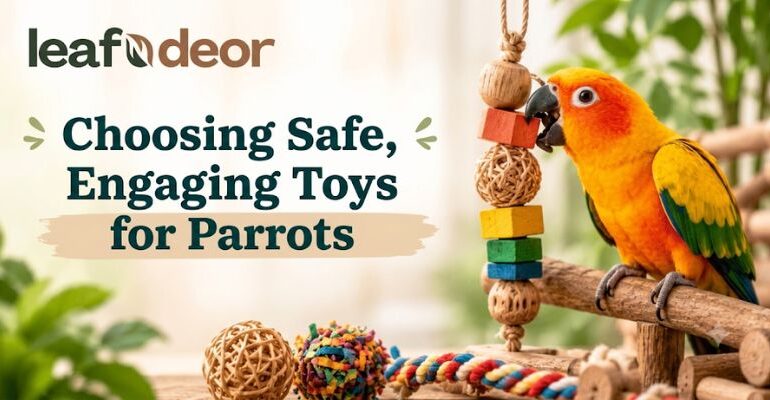
Parrots are curious, clever, and surprisingly particular about how they spend their time. A good toy is more than a colorful cage accessory—it can encourage chewing, climbing, foraging, and problem-solving. But with so many choices available, how do you know which toys are genuinely safe and worth buying? The answer often begins with choosing the right manufacturer.
A reliable Parrot Toys Manufacturer understands that bird toys need to balance fun, durability, design, and safety. From natural wood pieces to shreddable and foraging toys, thoughtful construction can make a noticeable difference in a parrot’s daily routine.
Why the Right Parrot Toy Manufacturer Matters?
Walk into a bird supply store and you will see dozens of toys that look appealing at first glance. Bright colors, bells, ropes, wooden blocks—the variety is enormous. Yet appearance alone tells you very little about whether a toy is appropriate for a particular bird.
The Association of Avian Veterinarians emphasizes enrichment as an important part of companion-bird care and notes that toys can support natural behaviors such as foraging, chewing, and exploration. It also recommends supervising birds while they interact with enrichment items because no commercial or homemade toy should be assumed to be completely risk-free. Association of Avian Veterinarians
This is where an experienced manufacturer earns its place. Instead of simply producing attractive products, a quality-focused company considers the bird’s beak strength, body size, play habits, material selection, attachment hardware, and the way individual components may wear down over time.
What Makes a Parrot Toy Safe?
Safety should always come before color, novelty, or price. Parrots naturally chew and dismantle objects, so manufacturers have to anticipate how a toy will behave after repeated use—not just how it looks when it comes out of the package.
Look for thoughtful material choices
Natural, appropriately prepared wood, bird-safe fibers, stainless-steel components, and suitable shredding materials are commonly used in well-designed bird toys. However, material safety also depends on how those materials are treated, assembled, and maintained.
- Check that wooden components are untreated and suitable for birds.
- Look carefully at metal clips, hooks, chains, and connecting parts.
- Avoid loose fibers or damaged rope that could wrap around feet or toes.
- Choose toy sizes appropriate for the bird’s species and beak strength.
Veterinary guidance from VCA Animal Hospitals similarly highlights risks involving loose fibers, unsuitable hardware, toxic metals, and detachable pieces. Its bird-care guidance recommends inspecting toys regularly and removing damaged items before they become hazards. VCA Animal Hospitals
Fun Is About More Than Bright Colors
A good parrot toy should give a bird something to do. That might mean pulling apart a shreddable toy, searching for a hidden treat, climbing through different textures, or simply working out how a moving component behaves.
Foraging toys are especially interesting because they turn an ordinary feeding moment into an activity. The Association of Avian Veterinarians reports that captive parrots can spend substantially more time foraging when suitable enrichment is provided. In some observations, foraging enrichment increased activity from less than an hour to roughly two or three hours a day. Association of Avian Veterinarians enrichment guidance
That is why an experienced natural bird toys supplier can be valuable for retailers and bird owners alike. A varied collection can include:
- Shredding and chewing toys for natural beak activity.
- Foraging toys that encourage problem-solving.
- Climbing and hanging toys that promote movement.
- Texture-rich toys that provide sensory stimulation.
How to Choose the Best Manufacturer?
Choosing a manufacturer is not simply about finding the biggest catalog or the lowest price. Look for a supplier that can explain its materials, manufacturing approach, product sizing, and quality checks clearly.
Before placing a larger order, consider these practical questions:
- Does the manufacturer offer different toy sizes for different bird species?
- Are materials selected with chewing birds in mind?
- Can the supplier provide consistent product quality for repeat orders?
- Are the toys designed around genuine enrichment rather than decoration alone?
- Does the company provide clear product information for retailers and customers?
If you are comparing designs or building a bird-toy range, it is also useful to understand how species, age, personality, and chewing habits influence toy selection. For a deeper look, read How to Choose the Best Toys for Your Bird: Important Considerations.
Why Toy Variety Matters?
One mistake bird owners sometimes make is filling a cage with several toys that all serve the same purpose. A parrot may quickly lose interest if every item is simply another hanging block.
Instead, mix different forms of enrichment. A shredding toy, puzzle feeder, climbing toy, and chewable natural-material toy can create a much richer environment. VCA recommends rotating toys and introducing new ones gradually, particularly for birds that are cautious around unfamiliar objects. VCA Animal Hospitals bird housing guidance
FAQs About Parrot Toys
What materials are commonly used in safe parrot toys?
Natural untreated wood, appropriate natural fibers, stainless steel, cardboard, and other bird-safe materials are commonly used. The suitability of any material depends on its treatment, construction, size, and the individual bird.
How often should parrot toys be replaced?
There is no universal replacement schedule. Inspect toys frequently and replace them when they become heavily damaged, develop dangerous loose fibers, expose sharp edges, or contain parts that can be swallowed.
What type of toy is best for a bored parrot?
Foraging, shredding, chewing, climbing, and puzzle toys can all provide useful enrichment. The best choice depends on what the individual parrot naturally enjoys and how confidently it interacts with new objects.
Should parrots be supervised with new toys?
Yes. Supervision is particularly important when introducing a new toy. Watch how the bird interacts with it and remove the toy if you notice dangerous chewing, loose strands, broken components, or other potential hazards.
Final Thoughts
The best parrot toy is not necessarily the biggest, brightest, or most complicated one. It is the toy that gives a bird a safe opportunity to chew, explore, forage, climb, and think. Choosing a manufacturer that takes those needs seriously helps turn everyday playtime into meaningful enrichment—something both parrots and their owners can appreciate.
Full Audio Version: Click Here