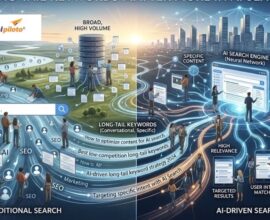
Imagine a potential customer asking an AI assistant to recommend a reliable service provider, compare products, or explain which solution fits a specific business problem. Will your brand be part of that answer? Search is expanding beyond traditional results pages, creating new opportunities for businesses that make their expertise easy to discover, understand, and trust.
For a modern digital marketing agency India, this shift represents more than another marketing trend. AI-powered search is changing how people research options and evaluate brands before making decisions. Businesses that prepare now can strengthen their online presence, reach more relevant audiences, and build a search strategy that extends beyond conventional rankings.
What Is AI Search Optimization?
AI search optimization is the process of making a business’s information more useful, understandable, and discoverable across search experiences that use artificial intelligence. These experiences may include AI-generated summaries, conversational search tools, and assistants that help users compare options or explore complicated questions.
Traditional SEO remains part of the picture. Search engines still need to discover and interpret webpages, while users continue to rely on organic listings, local results, and specialist websites. AI search optimization builds on those foundations by emphasizing clear answers, reliable information, topical depth, and a consistent understanding of what a brand offers.
Think of a business website as a knowledgeable salesperson. It is not enough for that salesperson to mention a product repeatedly. They must explain what it does, who benefits from it, how it compares with alternatives, and where its limitations lie. AI search optimization applies a similar principle to the information a business publishes online.
Why AI Search Creates a New Growth Opportunity
Customers rarely follow a perfectly straight path from awareness to purchase. Someone considering a new accounting platform might begin by asking what features a small company needs, then compare software options, investigate integrations, and finally look for a provider with suitable support.
AI-assisted search can help people explore these connected questions in a single research journey. Depending on the platform and query, it may summarize information from multiple sources, suggest alternatives, or provide links for deeper investigation.
Google’s official documentation on AI features in Search explains how website owners can approach these experiences. It does not promise special rankings for AI-optimized pages; established SEO fundamentals and useful, accessible content remain important.
For businesses, the opportunity lies in being relevant at more than one point in the customer journey. A brand might help someone understand a problem, compare possible solutions, or evaluate a service before contacting a provider.
Where the growth potential appears
- Earlier discovery: Helpful educational content can introduce a brand while customers are still defining their needs.
- More relevant consideration: Detailed service pages and comparisons help prospective buyers assess whether a business fits their requirements.
- Stronger brand understanding: Consistent information about services, expertise, and specialization makes a business easier to interpret.
- Better-qualified enquiries: Content that answers practical questions may help prospects understand the offering before they make contact.
These are opportunities, not guaranteed outcomes. AI systems do not recommend every useful website, and appearing in an answer does not automatically produce a sale. Businesses still need a compelling offer, credible information, and a website that makes the next step easy.
Move Beyond Keywords to Customer Questions
Keyword research remains valuable, but a list of search phrases cannot fully explain why someone is searching. Consider a company that sells cybersecurity services. Targeting a broad phrase such as “cybersecurity solutions” may bring visibility, but it says little about the specific concerns of a business owner.
That owner may actually want to know how to protect customer records, prepare for a security audit, reduce phishing risks, or choose between managed security services and an internal team. Each question reveals a different need and an opportunity to provide relevant guidance.
Create content around intent
A practical AI search optimization strategy starts by identifying the questions customers ask before they are ready to buy. Sales calls, customer support conversations, product reviews, and search-query reports can all reveal useful patterns.
Organize those questions around the customer’s decision-making process:
- Learning: Explain the problem, its causes, and the available approaches.
- Comparing: Discuss alternatives, features, costs, trade-offs, and suitability.
- Choosing: Clarify service scope, implementation, timelines, support, and what customers should expect.
For example, a website development company could publish a guide to selecting an ecommerce platform, a comparison of relevant platform features, and a service page explaining its development process. Each page serves a distinct purpose, while internal links connect the resources into a useful journey.
This approach also supports long-tail keyword optimization. Specific searches may have less overall demand than broad phrases, but they can reveal a more clearly defined problem. The aim is not to create a separate article for every wording variation; it is to answer meaningful questions thoroughly without duplicating content.
Build Content That AI Systems and People Can Understand
Clear content benefits readers first. It also helps search systems interpret the purpose and subject of a page. That does not mean writing mechanically for an algorithm or turning every heading into a question. It means making the information accurate, logically organized, and easy to follow.
What strong content should include
- A direct opening answer: Address the main question early, then explain the details.
- Specific supporting information: Use realistic examples, relevant evidence, and practical recommendations.
- Transparent claims: Distinguish verified facts from estimates, opinions, and projections.
- Meaningful expertise: Show relevant experience, clear authorship, and genuine insight where appropriate.
- Useful structure: Use descriptive headings, concise paragraphs, and relevant internal links.
Google’s guidance on helpful, reliable, people-first content offers a sound starting point. Pages should satisfy their intended audience rather than exist mainly to attract clicks.
Businesses should also avoid publishing large volumes of generic AI-generated articles without meaningful review. AI tools can help with research, outlining, and editing, but human oversight remains important for accuracy, originality, appropriate context, and practical value.
Strengthen Your Brand’s Digital Footprint
AI search visibility is not simply a matter of improving one webpage. A business’s identity and expertise are expressed across its website, service descriptions, author profiles, business listings, industry publications, and other relevant sources. Inconsistencies across those touchpoints can make it harder for customers—and automated systems—to understand what the company actually does.
Start with the fundamentals. Use consistent business names and contact details, explain services precisely, keep important pages updated, and ensure that claims about qualifications or experience are accurate. Relevant third-party mentions can contribute to a stronger reputation, particularly when they come from credible sources within the industry.
Structured data can help search engines interpret supported details about an organization, product, or webpage. It must accurately reflect the page’s content and comply with the relevant guidelines. Schema markup does not guarantee that a website will appear in an AI-generated answer.
For companies modernizing their broader digital operations, business digital transformation services can connect website improvements, marketing analytics, customer experience, and automation. The advantage comes from making these activities work toward a shared goal instead of treating SEO as an isolated task.
Technical SEO Still Matters
Even excellent content cannot perform well if search engines cannot access it or users struggle to navigate the website. Technical SEO remains a foundation for both traditional search and efforts to improve AI discovery.
Review the following areas regularly:
- Crawling and indexing: Make sure important pages are accessible and not unintentionally blocked from search engines.
- Mobile experience: Ensure that navigation, forms, and content work comfortably on smaller screens.
- Site structure: Connect related pages through descriptive internal links and avoid unnecessary duplication.
- Page clarity: Use accurate titles, headings, and content that reflects each page’s purpose.
- Performance and usability: Identify technical issues that slow pages down or prevent visitors from completing key actions.
Businesses investing in SEO marketing in India should connect these technical improvements to a broader strategy. A fast, accessible website is valuable, but it still needs relevant content and a convincing reason for visitors to choose the business.
Measure Growth Beyond Search Rankings
One challenge with AI search is that visibility and traffic may not always move together. A person might encounter a brand in an AI-generated response, remember its name, and visit the website later. Another user might find an answer sufficient and never click through.
That makes measurement more nuanced, not less necessary. Businesses should track several indicators rather than treating one ranking report as a complete picture of performance.
- Organic search performance: Monitor relevant impressions, clicks, queries, and landing pages using available search reporting tools.
- Qualified leads and sales: Determine whether search visitors become meaningful business opportunities.
- Content-assisted conversions: Identify articles and service pages that help people progress toward a decision.
- Referral traffic: Review visits from AI assistants or other discovery platforms where reliable analytics data is available.
- Brand demand: Observe changes in branded searches and direct traffic while accounting for other possible influences.
Set a baseline before making major changes and review results over time. Seasonality, advertising, competition, pricing, and website changes can all affect performance. Avoid attributing every increase or decline to AI search without supporting evidence.
Frequently Asked Questions
1. What is AI search optimization?
AI search optimization helps make a business’s content clear, credible, and discoverable across AI-assisted search experiences. It combines sound SEO foundations with useful answers, topical depth, consistent brand information, and a focus on customer needs.
2. Is AI search optimization different from traditional SEO?
It builds on traditional SEO rather than replacing it. Technical accessibility, relevant content, internal linking, and keyword research remain important, while AI search optimization places additional emphasis on clear answers, context, and information that supports complex questions.
3. Can small businesses benefit from AI search optimization?
Yes. Small businesses can publish focused, practical content that addresses their customers’ specific questions, maintain accurate business information, and explain their expertise clearly. Results depend on competition, relevance, implementation, and how search platforms present information.
4. How long does it take to see results?
There is no universal timeline. Outcomes depend on the website’s current condition, competition, content quality, technical issues, and search platform behavior. Track progress over time using search performance, qualified leads, conversions, and other relevant business measures.
Final Thoughts
AI search optimization offers businesses a new reason to make their digital presence more useful, coherent, and trustworthy. The strongest strategy is not about chasing every new AI feature. It is about understanding customers, answering their questions with substance, maintaining sound technical foundations, and measuring what contributes to real growth. Brands that build these habits will be better prepared as search continues to evolve.
Blog Development Credits
The concept was shaped with Amlan Maiti, developed through editorial research, and refined for search performance by Digital Piloto Private Limited.