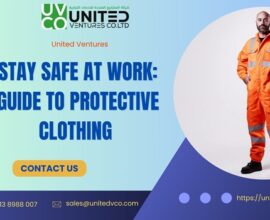
Industrial workplaces can expose employees to heat, sparks, chemicals, dust, dirt, mechanical hazards, and other job-specific risks. While no single garment can protect workers from every hazard, properly selected protective clothing can form an important part of a broader PPE program. OSHA requires employers to assess workplace hazards and select PPE that protects workers from identified risks and fits properly. Coveralls can therefore be much more than everyday workwear when their material, construction, fit, and protective performance match the job.
What Makes Quality Coveralls Important for Industrial Safety?
Quality coveralls provide a practical layer between workers and workplace hazards while helping integrate body protection into a wider safety program. Their value depends on selecting the right garment for the actual conditions rather than simply choosing the heaviest or most expensive option.
OSHA’s PPE requirements emphasize hazard assessment, appropriate selection, proper fit, maintenance, and employee training. This means coveralls should be treated as part of a planned protection strategy rather than as a substitute for engineering or administrative controls.
1. Protection Should Match the Workplace Hazard
The first consideration when selecting industrial coveralls is the hazard they are expected to address. Construction, manufacturing, oil and gas, chemical processing, welding, maintenance, and utility operations can present very different risks.
For example, a garment designed for general dirt and abrasion should not automatically be assumed to provide protection against flames, chemicals, molten substances, or other specialized hazards. Protective clothing must be selected according to the exposure identified through a workplace hazard assessment.
NIOSH also emphasizes that no single protective ensemble can protect against every hazard. The appropriate combination of protective clothing and other PPE depends on the specific exposure.
2. Material Quality Affects Protective Performance
The fabric and garment construction influence how coveralls perform in demanding environments. Depending on the application, organizations may consider characteristics such as resistance to heat, flame, abrasion, tearing, liquids, or particular chemical exposures.
However, a material should never be selected simply because it sounds more protective. The garment’s documented performance, intended application, relevant standards, and manufacturer’s instructions should be considered together.
ISO 13688:2013 establishes general requirements for protective clothing covering areas such as ergonomics, sizing, ageing, compatibility, marking, and manufacturer information. Importantly, ISO states that this standard is intended to be used alongside standards covering specific protective performance rather than as a standalone protective specification.
3. Proper Fit Is a Safety Consideration
A technically capable garment can still create problems if it does not fit the person wearing it correctly. Excess material can interfere with movement or equipment, while an overly tight garment may restrict mobility and reduce comfort during long shifts.
OSHA specifically requires PPE to properly fit affected employees. Quality coveralls should therefore offer appropriate sizing, practical movement, secure closures, and a design suitable for the tasks being performed.
Fit also affects whether workers consistently wear PPE as intended. A garment that supports normal movement and working conditions is more practical for routine use than one that unnecessarily restricts the wearer.
4. Durability Supports Consistent Protection
Industrial coveralls can face repeated washing, abrasion, stretching, contamination, and mechanical wear. Seams, fasteners, pockets, closures, and fabric can deteriorate over time, particularly in demanding environments.
Durability matters because protective clothing must remain suitable for its intended use. OSHA states that defective or damaged PPE should not be used and requires training covering PPE care, maintenance, useful life, and disposal.
For procurement teams, this makes garment quality more than a purchasing issue. Construction and industrial organizations should consider expected service conditions, cleaning requirements, inspection procedures, replacement practices, and the manufacturer’s care instructions before standardizing a garment.
5. Quality Coveralls Work With Other PPE
Coveralls are only one component of a complete PPE system. Depending on the hazard assessment, workers may also require safety helmets, gloves, eye protection, safety footwear, hearing protection, respiratory protection, or specialized equipment.
OSHA’s PPE guidance makes clear that PPE should not be relied upon as the only method of hazard control. Engineering controls, guards, safe work practices, and other measures should be used where feasible, with PPE providing additional protection when hazards remain.
This approach prevents a common procurement mistake: treating coveralls as a universal solution. The right question is not simply, “Which coverall is strongest?” It is, “Which protective clothing is appropriate for this specific exposure and how does it integrate with the rest of our safety program?”
6. Quality Should Include More Than Fabric
When comparing industrial coveralls, procurement teams should look beyond appearance and basic fabric weight. Useful evaluation factors include:
- Intended hazard and exposure type
- Relevant protective performance requirements
- Fabric and construction quality
- Correct sizing and fit availability
- Seam and fastening quality
- Compatibility with other PPE
- Cleaning and maintenance requirements
- Expected service conditions and replacement needs
- Manufacturer documentation and care instructions
This broader evaluation can help organizations avoid selecting garments solely on purchase price. A lower-cost garment may not provide appropriate performance, durability, fit, or documentation for the intended application.
How Should Businesses Choose Industrial Coveralls?
Start with the workplace rather than the product catalogue. Identify the tasks employees perform, the hazards they encounter, the duration of exposure, environmental conditions, and other PPE already in use.
Next, compare garments against the documented requirements. Ask suppliers for product specifications, applicable certifications or test information, sizing details, care instructions, and limitations. Organizations operating across different jurisdictions should also confirm the requirements applicable to their location and industry.
For businesses sourcing broader workplace protection and Industrial Equipment Solutions in Saudi Arabia, evaluating the supplier’s overall product range can also help simplify PPE procurement and maintain consistency across safety programs.
Why Supplier Selection Matters?
A supplier does more than deliver garments. Reliable procurement depends on product information, consistent specifications, availability, sizing options, quality controls, and support for selecting products appropriate to the intended application.
United Ventures Co. provides industrial equipment and PPE solutions designed around workplace safety and operational requirements. Its broader PPE offering includes protective equipment such as helmets, gloves, goggles, and masks, supporting organizations that need coordinated industrial safety provisions.
Frequently Asked Questions
1. Why are quality coveralls important in industrial workplaces?
Quality coveralls can provide an appropriate layer of body protection when their design and protective performance match the hazards identified in a workplace assessment. They should be used as part of a broader PPE and hazard-control program.
2. Are all industrial coveralls flame resistant?
No. General industrial coveralls should not automatically be treated as flame-resistant clothing. Flame-resistant protection must be selected when the relevant hazard assessment identifies a need for it, and the garment should have appropriate documented performance for the intended application.
3. How should companies select the right coveralls?
Companies should begin with a hazard assessment and then consider material, protective performance, fit, durability, compatibility with other PPE, maintenance requirements, and applicable standards or regulations.
4. Can coveralls replace other PPE?
No. Coveralls address body protection and cannot replace PPE such as helmets, gloves, eye protection, safety footwear, or respiratory protection when those items are required by the identified hazards.
5. How often should industrial coveralls be replaced?
There is no universal replacement interval for every garment. Replacement should follow the manufacturer’s instructions, workplace inspection procedures, service conditions, damage, contamination, deterioration, and the garment’s intended useful life.
Final Thoughts
Quality coveralls matter because industrial safety depends on matching protection to real workplace risks. The right garment combines appropriate material, protective performance, fit, durability, and compatibility with the rest of a company’s PPE program.
For safety managers and procurement teams, the most effective approach is to begin with hazard assessment, verify the garment’s intended protective performance, train workers in proper use and care, and establish clear inspection and replacement practices. Quality should therefore be measured by suitability for the job not simply by appearance or price.
Organizations looking to strengthen their industrial safety provisions can evaluate coveralls alongside their broader PPE and equipment requirements. A properly selected PPE program helps create a more structured approach to protecting workers while supporting reliable day-to-day operations.
Full Audio Version:- Click Here