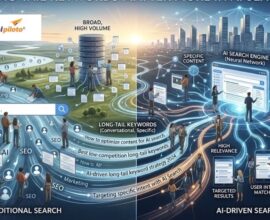
Search is evolving faster than many marketers expected. Instead of simply matching keywords, AI-powered search engines now focus on understanding context, intent, and relationships between topics. That means publishing isolated articles is no longer enough. Brands that organize information into meaningful semantic content clusters are far more likely to earn visibility, trust, and AI-generated citations.
Whether you’re a business owner or work with a digital marketing agency in kolkata, understanding semantic content strategy is becoming essential. AI systems don’t just evaluate a single page—they interpret your entire website as a connected knowledge source. That’s exactly where semantic clustering creates a competitive advantage.
What Are Semantic Content Clusters?
Semantic content clusters are groups of interconnected pages built around one core subject and its closely related subtopics. Unlike traditional keyword grouping, semantic clusters answer multiple user questions while demonstrating topical authority. Every article strengthens the others through logical internal linking and contextual relevance.
Think of your website as a university library. A single book provides useful information, but an entire section dedicated to one subject creates a richer learning experience. AI search engines work in much the same way—they reward comprehensive knowledge rather than scattered information.
Why AI Search Prefers Semantic Relationships
Modern AI search platforms use natural language understanding, entity recognition, and contextual analysis to determine which sources deserve visibility. Google’s documentation explains that its systems increasingly understand concepts rather than relying solely on exact keywords, helping deliver more relevant search experiences.
According to Google’s Search documentation, multiple ranking systems work together to surface content that demonstrates expertise, relevance, and helpfulness rather than simple keyword repetition (Google Search Central).
Characteristics of AI-Friendly Content Clusters
- Each article answers a distinct but closely related user question.
- Internal links connect supporting pages back to a comprehensive pillar guide.
- Entities, concepts, and terminology remain consistent across the website.
- Content addresses beginner, intermediate, and advanced search intent.
This structure naturally improves entity SEO, topical authority, and AI search optimization without forcing repetitive keywords into every paragraph.
Building a Semantic Content Cluster That Lasts
Successful clusters begin with understanding the audience instead of chasing search volume alone. Start by identifying the primary topic, then map every supporting question customers ask before, during, and after making a decision.
A Practical Workflow
- Create one detailed pillar page covering the primary subject.
- Develop supporting blogs that explore individual subtopics in depth.
- Connect pages using descriptive internal links instead of generic anchor text.
- Update older articles whenever new industry developments emerge.
- Measure engagement, citations, and user satisfaction—not just rankings.
While building these interconnected resources, investing in a reliable website development service in kolkata ensures your site architecture supports efficient crawling, structured navigation, and improved user experience.
Common Mistakes That Limit AI Visibility
Many websites publish dozens of articles covering nearly identical topics. Ironically, this often weakens authority instead of strengthening it because AI systems struggle to identify the definitive resource.
Avoid These Pitfalls
- Publishing multiple articles targeting the exact same search intent.
- Ignoring entity consistency across pages.
- Creating content without a logical internal linking structure.
- Updating blogs only after rankings decline.
Technical implementation matters too. Working alongside an experienced software company in Kolkata can help integrate structured data, improve page performance, and support scalable content architecture that AI systems can interpret more effectively.
Why Semantic Depth Beats Keyword Density
Years ago, repeating keywords frequently could influence rankings. Today, that approach feels outdated. AI evaluates whether your content genuinely explains a subject from multiple perspectives. Articles enriched with examples, comparisons, definitions, related concepts, and practical insights create stronger semantic signals than keyword-heavy copy.
Research published by Google’s Search team consistently emphasizes creating people-first content that demonstrates experience and satisfies user intent instead of optimizing solely for search engines (Google Search Central).
Also Read: Why Traditional B2B SEO Fails in AI Search Environments
Frequently Asked Questions
Q. What is a semantic content cluster?
A. It is a structured collection of interconnected articles covering one broad topic and its related subtopics to demonstrate comprehensive expertise.
Q. Do semantic clusters improve AI search rankings?
A. Yes. They help AI understand topical relationships, improve contextual relevance, and strengthen overall website authority.
Q. How many articles should one content cluster contain?
A. There is no fixed number. Most effective clusters begin with one pillar page supported by five to fifteen high-quality articles covering different user intents.
Q. Are semantic content clusters better than traditional keyword targeting?
A. Rather than replacing keyword research, semantic clustering expands it by focusing on concepts, entities, and user intent alongside important search phrases.
Final Thoughts
AI search is rewarding websites that organize knowledge instead of merely publishing more pages. Semantic content clusters help brands demonstrate expertise, build stronger topical authority, and create a better experience for both readers and intelligent search systems. Businesses that embrace this structured approach today will be better positioned as AI-driven discovery continues to reshape the future of search.
Blog Development Credits:
Originally conceptualized by Amlan Maiti, this blog was crafted using modern AI tools like ChatGPT, Gemini, and Copilot, and later polished with strategic insights from the SEO team at Digital Piloto Private Limited.