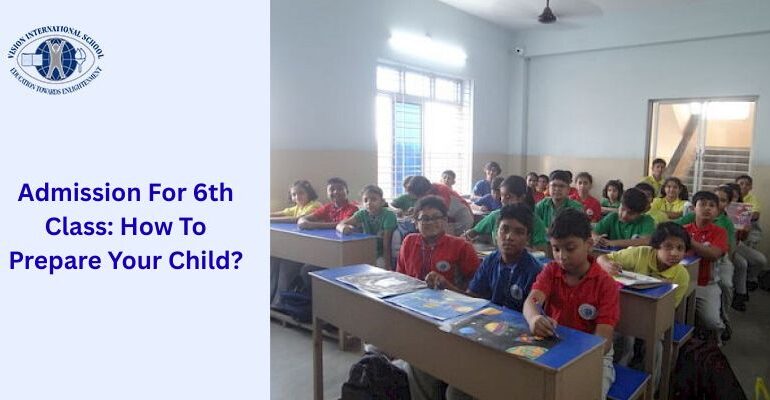
Moving into Class 6 is more than stepping into a new classroom. For many children, it is the stage when lessons become more detailed, expectations increase, and independent learning starts to matter. So, how can parents prepare their child without turning every evening into a coaching session? A little planning, regular practice, and encouragement can make the transition much easier.
If your child is preparing for 6th standard admission, the focus should not be on memorising an advanced syllabus. Instead, help your child strengthen the academic basics and study habits they will need in middle school. NCERT’s learning-outcome framework for Classes 1 to 8 focuses on identifying learning progress and gaps so that students can receive appropriate academic support.
Strengthen the Academic Basics First
Before worrying about difficult admission questions, make sure your child’s foundation is strong. A student who is comfortable with basic mathematics, reading comprehension, grammar, and science concepts is generally better prepared to handle the demands of Class 6.
- Mathematics: Revise fractions, decimals, percentages, multiplication, division, geometry, and basic word problems.
- English: Practise reading comprehension, vocabulary, grammar, sentence construction, and short written responses.
- Science: Review familiar concepts related to plants, animals, materials, the human body, energy, and the environment.
- General awareness: Encourage conversations about nature, maps, technology, current events, and everyday observations.
There is no need to turn revision into an exhausting routine. A short, focused study session each day can be more productive than a long weekend session when the child is already tired.
Develop Independent Study Habits
Class 6 often brings a noticeable change in how children are expected to manage their schoolwork. They may have more subjects, assignments, notebooks, projects, and revision to organise. Parents can make this transition easier by gradually encouraging independence.
Give your child responsibility for simple academic tasks. They can maintain a homework diary, organise their school bag, check completed assignments, and decide which subject requires additional practice. Parents should remain available for guidance, but children also need opportunities to solve small problems on their own.
This approach goes beyond academic performance. UNESCO highlights foundational learning as including skills such as literacy, numeracy, and social-emotional development, all of which contribute to a child’s ability to continue learning.
Prepare for the Class 6 Admission Process
Admission procedures differ from one school to another. Some schools may conduct an assessment, while others may consider previous academic performance, interaction, or a combination of factors. Parents should therefore check the latest admission guidelines provided by the school rather than depending entirely on older sample papers.
If your child’s admission process includes an academic assessment, practise gradually:
- Start with untimed questions to check whether the basic concept is understood.
- Introduce short timed exercises after your child becomes comfortable with the topic.
- Discuss incorrect answers and identify why the mistake happened.
- Revisit difficult topics after a few days instead of repeatedly solving the same questions.
This method builds useful examination habits without making preparation feel like constant testing. The same skills can also help students when preparing for admission for 8th class or other academic transitions in the future.
Make Reading a Daily Habit
Reading is one of the simplest ways to improve a child’s academic readiness. Instead of limiting reading to textbooks, allow your child to explore age-appropriate storybooks, biographies, magazines, newspapers, and non-fiction books.
More importantly, talk about what they have read. Ask questions such as, “What did you understand from this chapter?” or “What would you have done differently?” These conversations encourage comprehension, reasoning, and the ability to express ideas clearly.
Communication practice can also be built into everyday activities. Ask your child to explain a mathematics solution, describe a science concept, or summarise a story in their own words. For families considering a private school in hooghly district, developing these habits can help children approach a new academic environment with greater confidence.
Balance Preparation With Well-Being
Academic preparation should not make a child believe that admission depends on achieving perfection. Children also need adequate sleep, physical activity, hobbies, family time, and opportunities to relax.
UNESCO and UNICEF have highlighted the connection between effective foundational education, health, and well-being.
- Set achievable study goals instead of demanding perfect scores.
- Praise consistent effort and improvement.
- Use practice tests occasionally to build familiarity and time-management skills.
- Give extra attention to difficult topics without making your child feel discouraged.
Frequently Asked Questions About Class 6 Admission
1. What should a child know before entering Class 6?
A child should have a sound understanding of primary-level mathematics, reading comprehension, grammar, writing, and basic science. Reasoning, communication, and independent study habits are also valuable.
2. When should parents start preparing for Class 6 admission?
Starting several weeks before the expected admission assessment can provide enough time to identify learning gaps and revise them without unnecessary last-minute pressure.
3. Are sample papers useful for Class 6 admission preparation?
Yes, if the school provides them or if they accurately reflect the expected academic level. Sample papers can help children become familiar with question formats and time management, but they should not replace concept-based learning.
4. How can parents reduce admission-related stress?
Keep study sessions manageable, include regular breaks, maintain a predictable routine, and treat mistakes as opportunities to learn. Children generally respond better to encouragement than constant pressure.
Final Thoughts
Preparing your child for Class 6 is not about completing the most worksheets or memorising the most answers. It is about building a reliable academic foundation and helping your child become a more confident, independent learner. With regular revision, reading, practical study habits, and the right encouragement, the move into middle school can feel like an exciting new chapter rather than a stressful hurdle.