
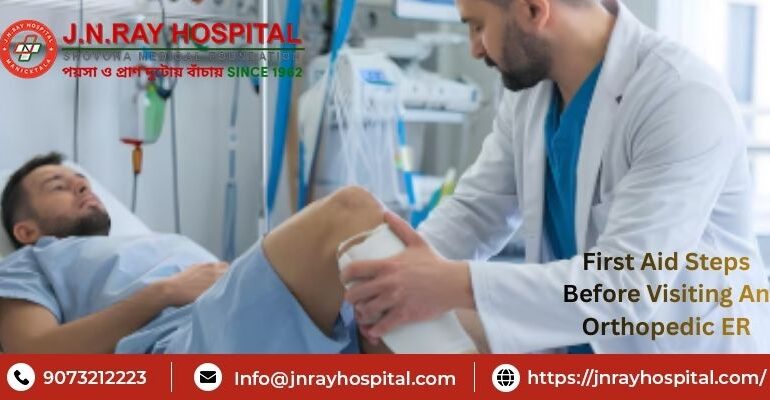
Accidents rarely give you a warning. One minute you are walking, playing sports, or driving, and the next you may be dealing with a painful fall or twisted joint. In such moments, quick thinking can make a significant difference. Before reaching a hospital for emergency orthopedic care in Kolkata, the right first-aid steps can help prevent further damage and reduce complications.
Orthopedic injuries like fractures, sprains, or joint dislocations are among the most common trauma cases in urban cities. According to the Centers for Disease Control and Prevention (CDC), millions of people worldwide visit emergency departments every year due to falls and bone injuries. Knowing what to do before reaching an orthopedic hospital can protect the injured area and improve recovery outcomes.
Understand the Nature of the Injury
The first step is to assess the situation calmly. While panic is natural, staying composed helps you decide the safest course of action. Not every injury is immediately obvious. Sometimes, a fracture may appear as swelling or severe tenderness rather than a visibly broken bone.
Common signs of orthopedic emergencies include:
- Severe pain that worsens with movement
- Visible deformity or unusual limb position
- Rapid swelling or bruising around a joint
- Inability to bear weight or move the affected limb
- Numbness or tingling sensation
If any of these symptoms appear after an accident, it is wise to treat the situation as an orthopedic emergency and seek medical attention immediately.
Immobilize the Injured Area
One of the biggest mistakes people make after a fall or injury is attempting to move the affected limb unnecessarily. Movement can worsen fractures or cause additional tissue damage. Immobilization helps stabilize the bone and surrounding muscles.
Here are a few simple ways to keep the injured area stable before reaching a hospital:
- Use a splint: A stick, rolled magazine, or wooden board can work as a temporary splint.
- Wrap gently: Cloth, bandage, or scarf can secure the splint without cutting off circulation.
- Avoid straightening a limb: If a bone looks misaligned, do not attempt to correct it yourself.
Emergency responders and orthopedic specialists often emphasize immobilization because it prevents further bone displacement and reduces pain during transport.
Apply the R.I.C.E. Method
The R.I.C.E. method Rest, Ice, Compression, and Elevation—is widely recommended for many orthopedic injuries, especially sprains or soft-tissue damage.
How the R.I.C.E. method helps:
- Rest: Stop using the injured body part immediately.
- Ice: Apply a cold pack wrapped in cloth for about 15–20 minutes to reduce swelling.
- Compression: Light bandaging can control inflammation.
- Elevation: Keeping the injured limb above heart level may reduce swelling.
According to the U.S. National Library of Medicine (MedlinePlus), early cold therapy and rest can significantly reduce swelling and pain in musculoskeletal injuries.
Control Bleeding if There Is an Open Injury
Sometimes orthopedic trauma involves open wounds or bleeding. In such cases, controlling blood loss becomes the top priority.
- Use a clean cloth or sterile gauze to apply gentle pressure.
- Keep the injured limb elevated if possible.
- Avoid removing objects embedded in the wound.
Once bleeding is controlled, seek immediate hospital care. Severe injuries often require professional evaluation, imaging tests, and surgical expertise.
Prepare for Safe Transportation
Transporting the patient safely is just as important as the first aid itself. Rough handling during travel may worsen the injury.
While heading to a hospital that provides best orthopedic services in Kolkata, keep these precautions in mind:
- Support the injured limb with pillows or folded blankets.
- Keep the patient calm and hydrated if there is no nausea.
- Avoid giving food or drink if surgery might be required.
- Use a stretcher or wheelchair when possible.
These simple precautions can prevent complications until orthopedic specialists examine the injury.
Why Early Orthopedic Attention Matters?
Bone and joint injuries may appear manageable at first but can worsen if untreated. Conditions such as ligament tears, complex fractures, or joint dislocations often require diagnostic imaging like X-rays or MRI scans.
Prompt evaluation by orthopedic experts ensures proper alignment, reduces the risk of chronic pain, and supports faster recovery. In growing cities where road accidents and sports injuries are common, timely orthopedic trauma care plays a vital role in preventing long-term mobility problems.
Frequently Asked Questions
1. How do I know if a fracture needs emergency treatment?
If the injured area shows severe pain, visible deformity, swelling, or inability to move, it may indicate a fracture that requires immediate orthopedic evaluation.
2. Should I apply heat or ice after a bone injury?
Ice is usually recommended during the first 24–48 hours after an injury because it helps reduce swelling and inflammation.
3. Can I move someone with a suspected fracture?
Movement should be minimized. If transport is necessary, stabilize the injured area using a splint or support to avoid worsening the injury.
4. What are the most common orthopedic emergencies?
Common cases include fractures, dislocations, ligament injuries, sports trauma, and severe joint swelling caused by accidents or falls.
Final Thoughts
Orthopedic emergencies can happen anywhere at home, on the road, or during physical activities. While professional treatment is essential, the steps taken immediately after an injury often determine how smoothly recovery begins. By immobilizing the limb, using basic first aid, and seeking prompt medical attention, patients can significantly reduce complications and ensure better healing outcomes.